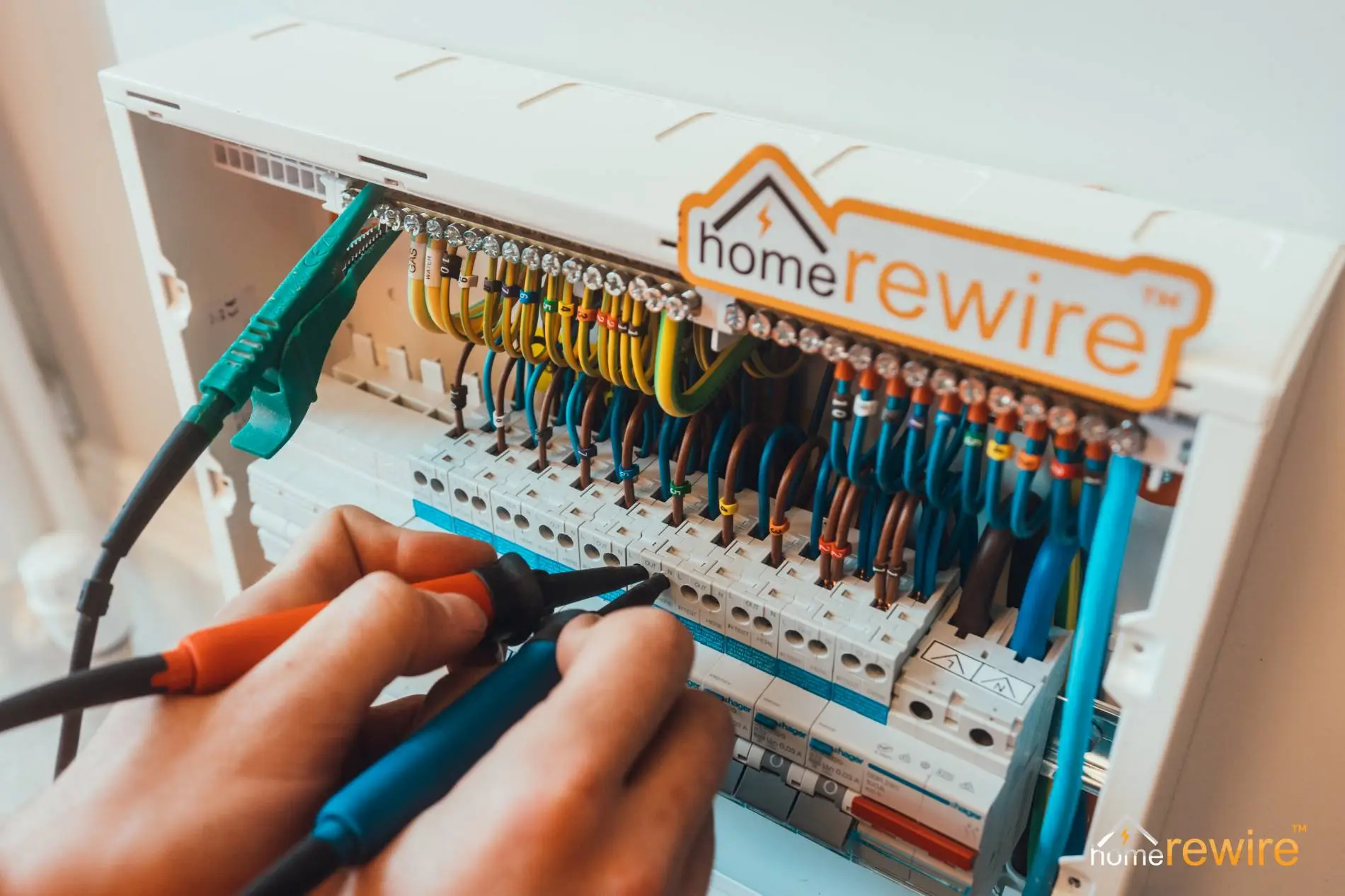
EIC vs EICR: Side-by-Side
They’re two letters apart and easy to mix up but one certifies new electrical work, and the other inspects what’s already installed.
| EIC | EICR | |
| Full name | Electrical Installation Certificate | Electrical Installation Condition Report |
| Purpose | Certifies new or altered electrical work | Assesses condition of existing installation |
| When issued | After a rewire, new circuit, or consumer unit replacement | Periodically, or before/during a tenancy |
| What it covers | The specific new work carried out | The entire fixed electrical installation |
| Result | Pass/fail on the installation itself | Satisfactory or Unsatisfactory, with coded observations |
| Legal requirement? | Yes, for any notifiable new work | Yes, for rental properties in Scotland (every 5 years) |
| How long it’s valid | No expiry — records the work done | 5 years for rentals; 10 years recommended for owner-occupied |
EIC and EICR: What’s the Difference?
Both certificates relate to electrical safety — but they serve completely different purposes, and confusing the two can leave landlords non-compliant and homeowners with the wrong paperwork.
What Is an EIC?
An EIC — Electrical Installation Certificate is issued when a qualified electrician completes new electrical installation work. Think full house rewire, a new consumer unit, or a freshly added circuit for an EV charger or kitchen extension. It’s the document that says: this work was done, it was tested, and it meets BS 7671.
You might also see it called a DEIC (Domestic Electrical Installation Certificate) or a BS 7671 electrical safety certificate. It’s sent to building control as proof of compliance, and a copy should be handed to you when the job is finished. Understanding uk electrical wiring colour codes is essential for both safety and compliance. These codes dictate the colors used for different electrical wires, ensuring that installations are clear and standardized. Following these guidelines helps prevent dangerous mistakes and makes maintenance easier for electricians.
What the electrician actually tests to produce an EIC is thorough:
- Continuity of protective conductors (earthing)
- Ring final circuit continuity
- Insulation resistance
- Polarity — live, neutral, and earth all correctly connected
- Earth fault loop impedance
- RCD tripping times and current limits
- Prospective fault current
- Verification of all earthing and bonding
One thing to be clear about: the EIC records the quality of the installation at the time it was done. It doesn’t go stale in the way a car MOT does. The certificate is still technically valid in the sense that it confirms the work was sound when completed. But it doesn’t tell anyone anything about the current condition of the wiring.
What Is an EICR?
An EICR — Electrical Installation Condition Report is a periodic inspection of an existing electrical system. The electrician isn’t checking new work. They’re looking at what’s already in the walls, floors, and consumer unit, and assessing whether it’s still safe.
It covers:
- The consumer unit and all switches
- Socket outlets throughout the property
- Light fittings and visible wiring
- Fixed electrical equipment (storage heaters, hard-wired smoke alarms, boilers)
- Any installations for the supply of electricity
When the inspection is done, the electrician issues a report coded as either Satisfactory or Unsatisfactory based on any observations they’ve made and how serious those are. If the report indicates any issues, it is crucial to follow light switch troubleshooting tips to ensure safety and functionality. Additionally, reviewing common causes of faulty switches can save time and prevent potential hazards. Regular maintenance and awareness of how to address these problems can lead to a safer home environment. The dangers of no earth wire in lighting can lead to serious electrical hazards, including the risk of electric shock and fire. Ensuring that all lighting fixtures are properly grounded is essential for safeguarding both lives and property. Homeowners should consult with a qualified electrician to assess their wiring and make any necessary upgrades.
EICR Observation Codes Explained
When an EICR comes back with issues, those issues are categorised using codes. Here’s what each one actually means:
- C1 — Danger present. Live conductors exposed, incorrect polarity — something that poses an immediate risk of injury. Immediate remedial action is required and you should avoid using the affected circuits until it’s fixed.
- C2 — Potentially dangerous. Not an immediate threat but likely to become one. Inadequate earthing is a classic example. Urgent remedial action required — a C2 makes the EICR unsatisfactory.
- C3 — Improvement recommended. The installation doesn’t fully meet current regulations but isn’t actually dangerous. A C3 alone won’t make the report unsatisfactory, but it’s worth addressing.
- FI — Further investigation required. Something looks off but needs a closer look before it can be classified. If there are multiple FI codes, the report may still be deemed unsatisfactory.
Any C1 or C2 on a report means it comes back Unsatisfactory. That means remedial work is needed before the installation can be signed off as safe.
Can an EIC Replace an EICR?
This is where a lot of landlords get tripped up, and it matters in Scotland specifically.
If a property has been fully rewired or is a new build, the EIC can be used in place of an EICR, provided the date of the next inspection indicated on the certificate hasn’t elapsed. In practice, that usually means within five years of the rewire date.
After that window, you need an EICR. A clean EIC from seven years ago doesn’t satisfy the legal requirement for a Scottish rental property. The legislation is clear: landlords must have a valid EICR every five years under the Housing (Scotland) Act 2006.
So if your property was rewired in 2020 and the EIC recommended reinspection in 2025, that reinspection is now overdue.
Scotland-Specific Rules for Landlords
Scotland’s electrical safety requirements for landlords have been in force since December 2015, earlier than England. The key obligations are:
- An EICR must be completed before a new tenancy starts
- During a tenancy, it must be renewed at least every five years
- A copy must be provided to all new and existing tenants
- The inspection must be carried out by an approved electrician registered with NICEIC or a member firm of SELECT (the Electrical Contractors’ Association of Scotland)
- From 1 March 2024, private rented properties must also have appropriate RCD protection in the consumer unit
Failing to meet these requirements isn’t a technicality, it can result in enforcement action and fines, and it could invalidate your landlord insurance.
When HomeRewire Issues an EIC
Every rewire HomeRewire completes, whether it’s a one-bedroom flat in the West End or a five-bedroom house in the Borders is certified to BS 7671 and comes with a full EIC on completion. That certificate is your proof that the installation is compliant, the work was tested, and everything was done to the current standard.
It’s the document you’ll hand to any future electrician, your mortgage lender, or a buyer’s surveyor.
If you’re a landlord whose EIC is coming up to the five-year reinspection date, HomeRewire also offers EICR testing. And if the result comes back unsatisfactory and a rewire is needed, they can turn that around faster than any other contractor in Scotland.
Most full rewires completed in one to two days, with crews large enough to work through a property at genuine pace.
Get a free home rewire quote today.
Frequently Asked Questions
Do I need both an EIC and an EICR?
Not necessarily at the same time. If you’ve had a rewire or new installation recently, the EIC is your document. Once five years have passed (or at the reinspection date noted on the certificate), you’ll need an EICR to assess the ongoing condition of the installation.
Can I use an EIC as proof of electrical safety for my rental property in Scotland?
Yes — but only if the EIC was issued recently enough that the recommended reinspection date hasn’t passed. Once that date lapses, an EICR is required.
How long does an EICR last?
For rental properties in Scotland, five years — or shorter if recommended by the electrician based on the installation’s condition. For owner-occupied homes, ten years is the general recommendation.
What happens if my EICR comes back unsatisfactory?
Any C1 or C2 observations make the report unsatisfactory. The issues will need to be remedied before the installation can be deemed safe. Depending on the extent of the faults, that could mean targeted repairs or — in older properties where there are multiple issues — a full rewire may be the more cost-effective and permanent solution.
Is an EICR the same as a Periodic Inspection Report (PIR)?
Yes. They’re the same document — the EICR is simply the updated name. Some older paperwork and tradesperson estimates may still use PIR.
Does a full rewire always require an EIC?
Yes. Any notifiable electrical work — including a full rewire — requires an EIC to be issued on completion. This is not optional; it’s a legal requirement under BS 7671 and Building Regulations.
Can I carry out electrical work myself and issue my own EIC?
No. Only a qualified electrician registered with an approved scheme (such as NICEIC) can issue an EIC for notifiable work. Unregistered work won’t be certified, may not be covered by your insurance, and could cause serious problems when selling the property.