It’s trade language. But if you’re rewiring a house in Glasgow, planning a renovation, or trying to make sense of an electricians quote, understanding the difference matters more than you’d think.
Here’s a plain-English breakdown of both stages, what happens during each, and why the sequence is non-negotiable.
First Fix vs Second Fix: Key Differences at a Glance
| Feature | First Fix | Second Fix |
| Timing | Before plastering/boarding | After plastering, before or after decorating |
| Visibility | Hidden inside walls and floors | All visible fittings and boards |
| What’s installed | Cables, back boxes, conduit | Sockets, switches, consumer unit, light fittings |
| Connections made? | No | Yes |
| Tested at this stage? | No (inspection only) | Yes, full electrical test and certification |
| Trades active at same time | Plumbers, carpenters, other rough-in trades | Decorators, tilers, kitchen fitters |
What Is First Fix Electrical?
First fix is everything that goes in before the walls are plastered or boarded. At this stage, the house is essentially a skeleton, studwork exposed, floorboards up (or not yet laid), ceilings open. The electrician works through the structure, running cables from one point to another without connecting anything up to a live circuit.
This is the rough-in phase. Nobody sees this work once it’s done, but it carries the whole job. If it’s rushed, badly routed, or undersized for the property’s actual demand, you’ll feel the consequences for decades.
What Happens During First Fix
- Cable routes are planned and chased (or clipped) through walls, floors, and ceilings
- All cables are run back to where the consumer unit will sit
- Back boxes for sockets, switches, light fittings, and data points are fitted into walls or studwork
- Positions for radiators, cookers, showers, and other high-load appliances are prepped with the right cable size
- Any steel conduit or protective sleeving is installed in areas where cables might be at risk
Nothing is connected at this point. Every cable end gets labelled and left long enough to trim back and terminate later. A good first fix electrician is also thinking ahead to the second fix, slack in the right places, clean routing that doesn’t create headaches later.
What Is Second Fix Electrical?
Second fix happens after the plastering is done and dry, surfaces are painted (or at least primed), and the building work is largely complete. Now the electrician comes back to finish everything off.
This is the visible half of the job. Sockets, switches, light fittings, the consumer unit itself, everything gets fitted, wired up, and tested. It’s also the stage where any mistakes from first fix become apparent, which is why quality at that earlier stage matters so much.
What Happens During Second Fix
- Consumer unit (fuse board) is fitted and all circuits are connected
- Sockets and switches are wired and screwed to their back boxes
- Light fittings are connected and positioned
- Cooker switches, shower units, and other dedicated circuit outlets are terminated
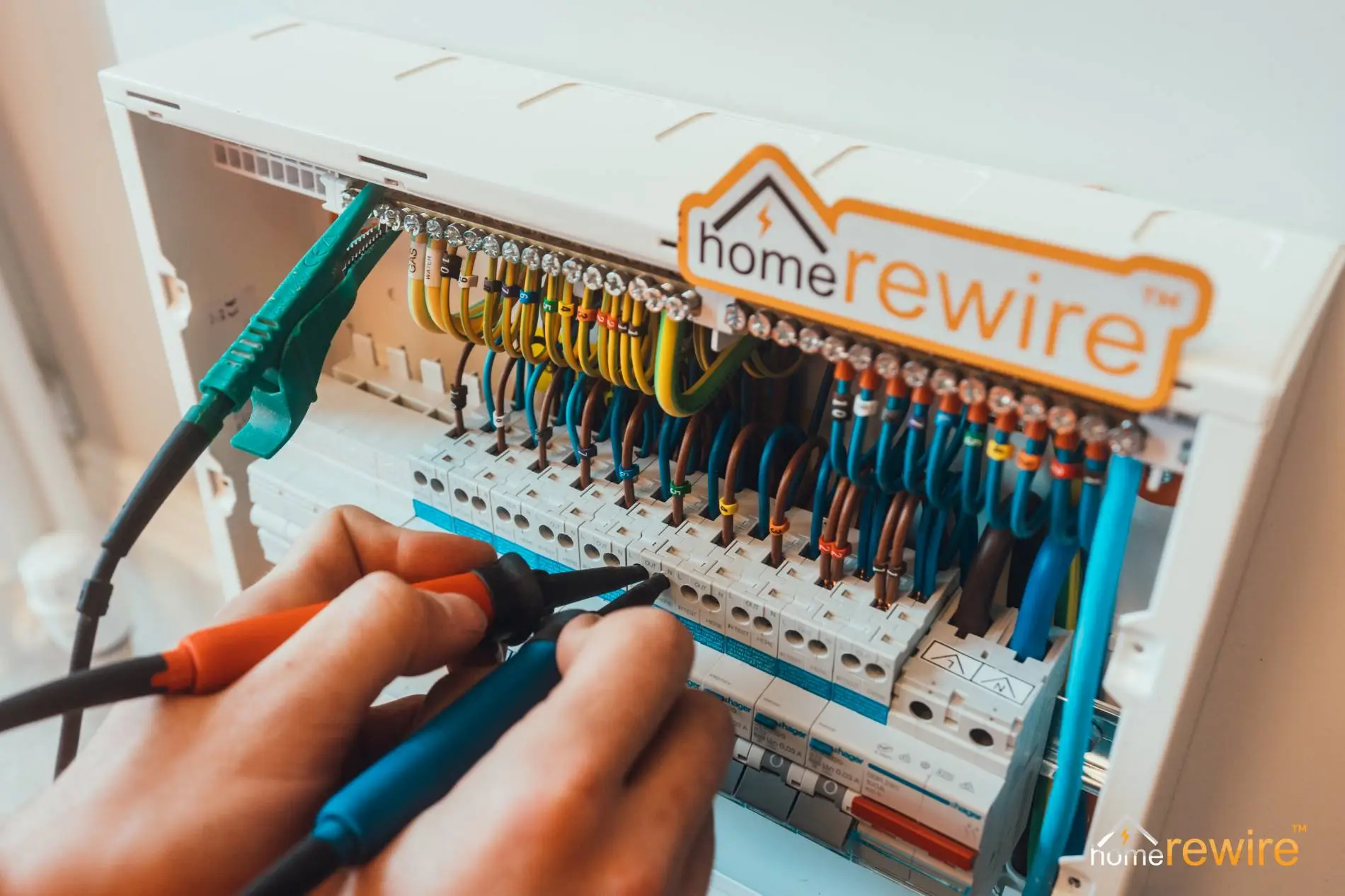
- The full installation is tested and inspected before sign-off
By the end of second fix, the property should have a fully operational electrical installation, certified and ready to use.
Why the Order Can’t Be Reversed
This isn’t just convention. The sequence exists because the two phases are physically dependent on each other. You can’t plaster a wall before the cables are in it. You can’t fit sockets before there’s a plastered, stable surface to mount them on. Trying to shortcut the sequence creates problems that are expensive, disruptive, or both.
Some jobs do blur the line slightly. In a partial rewire, for example, the electrician might be working in a room that’s already finished, so they’ll surface-run trunking or mini-trunking rather than chasing into plaster. That’s a workaround, not standard practice.
What This Means for a Full House Rewire
A complete house rewire covers both stages from start to finish. The electrician strips out the old installation, runs entirely new cabling throughout the property, then returns to fit all the outlets and boards once the walls are ready.
The gap between first and second fix depends on how quickly the plastering gets done. On a full house rewire with coordinated trades, this can move fast. On a self-managed renovation where the plasterer is booked three weeks out, the whole project drags.
Typical Rewire Timeline by Property Size
| Property Type | Approx. First Fix Duration | Approx. Second Fix Duration | Total (Efficient Crew) |
| 1-bed flat | Half a day | Half a day | 1 day |
| 2-bed house | 1 day | 1 day | 1-2 days |
| 3-bed semi | 1-2 days | 1 day | 2-3 days |
| 4-bed detached | 2-3 days | 1-2 days | 3-5 days |
| Large 5+ bed | 3-5 days | 2-3 days | 5-8 days |
These timescales assume a properly resourced crew. Solo electricians or small teams often take significantly longer, which is why a lot of homeowners get quotes that stretch to 4-10 days for a three-bedroom house. It doesn’t have to take that long when the right team is on it.
Common Questions Homeowners Ask About the Two Stages
These come up on almost every rewire project, so if you’re asking them too, you’re in good company.
Can I get the first fix done now and second fix later?
Yes, and it’s quite common in staged renovations. First fix is completed, the plasterer does their work, and the second fix electrician returns weeks or months later. Just make sure your cable ends are properly protected and labelled in the meantime.
If different electricians handle each stage, there can be handover issues, so wherever possible, use the same firm for both.
How do I know if the first fix was done properly?
An experienced second fix electrician will spot problems immediately. Common issues include cables run too short, back boxes set too deep or proud, inadequate cable sizes for high-demand circuits, and missing sleeves through joists. This is why continuity between stages matters.
Does a rewire always involve both stages?
A full rewire, yes. But smaller jobs like a consumer unit replacement or adding a new circuit to an existing installation may only involve second fix work, the infrastructure is already there, so there’s nothing to bury in the walls.
Is first fix or second fix more expensive?
First fix typically takes longer and involves more labour hours, so it tends to account for a larger portion of the overall cost. Second fix is faster once the cables are in place. Most electricians quote the whole job together rather than splitting it, which makes sense.
What’s a first fix inspection?
Before the walls are closed up, some homeowners and project managers request a first fix inspection — either by the building control officer or a third party. This is a chance to check that cable routes, back box positions, and conduit runs are correct before they’re buried forever. On a large or complex project, it’s worth doing.
Getting Your Rewire Quoted and Booked in Scotland
If you’re at the point where you know a rewire is coming, whether that’s a purchase, a rental property refresh, or an ageing installation that needs replacing, the first step is getting a proper quote from people who know what they’re doing.
HomeRewire is Scotland’s busiest house rewiring specialist and the number one rewiring contractor in Glasgow. We’ve completed over 6,000 rewires, and most full house rewires are finished in 1 to 2 days.
All work is certified to BS 7671, and they also offer consumer unit replacement, EICR testing, and optional plastering and cleaning add-ons so you’re not left patching up afterwards.
Request your free home rewire quote from HomeRewire today.
Frequently Asked Questions
What trades work alongside first fix electrical?
First fix is a busy phase on any site. Plumbers are running pipework, carpenters are framing, and other rough-in trades are all working at the same time. Good coordination between trades at this stage prevents cable routes conflicting with pipework or structural elements.
Does the plasterer work between first and second fix?
Yes, that’s exactly the sequence. First fix in, plasterer skims the walls and ceilings, surfaces dry out, then the second fix electrician returns. Rushing the plasterer or starting second fix before the plaster is dry causes problems.
Can second fix be done in a room that’s already been decorated?
Technically yes, but you risk marking or damaging finished surfaces. Most electricians prefer to work before final decoration. If the room is already done, they’ll take extra care and use protective sheeting, but it adds time.
What certification comes at the end of a rewire?
Once second fix is complete and the installation has been tested, the electrician issues an Electrical Installation Certificate (EIC). This confirms the work meets BS 7671 and is safe to use. You need this for building control sign-off and it’s essential if you’re selling or letting the property.
How long does first fix take on a typical 3-bed house?
With a well-organised crew, first fix on a three-bedroom semi-detached can be done in a day or two. Solo electricians often take longer because there’s simply more ground to cover and only one set of hands doing it.