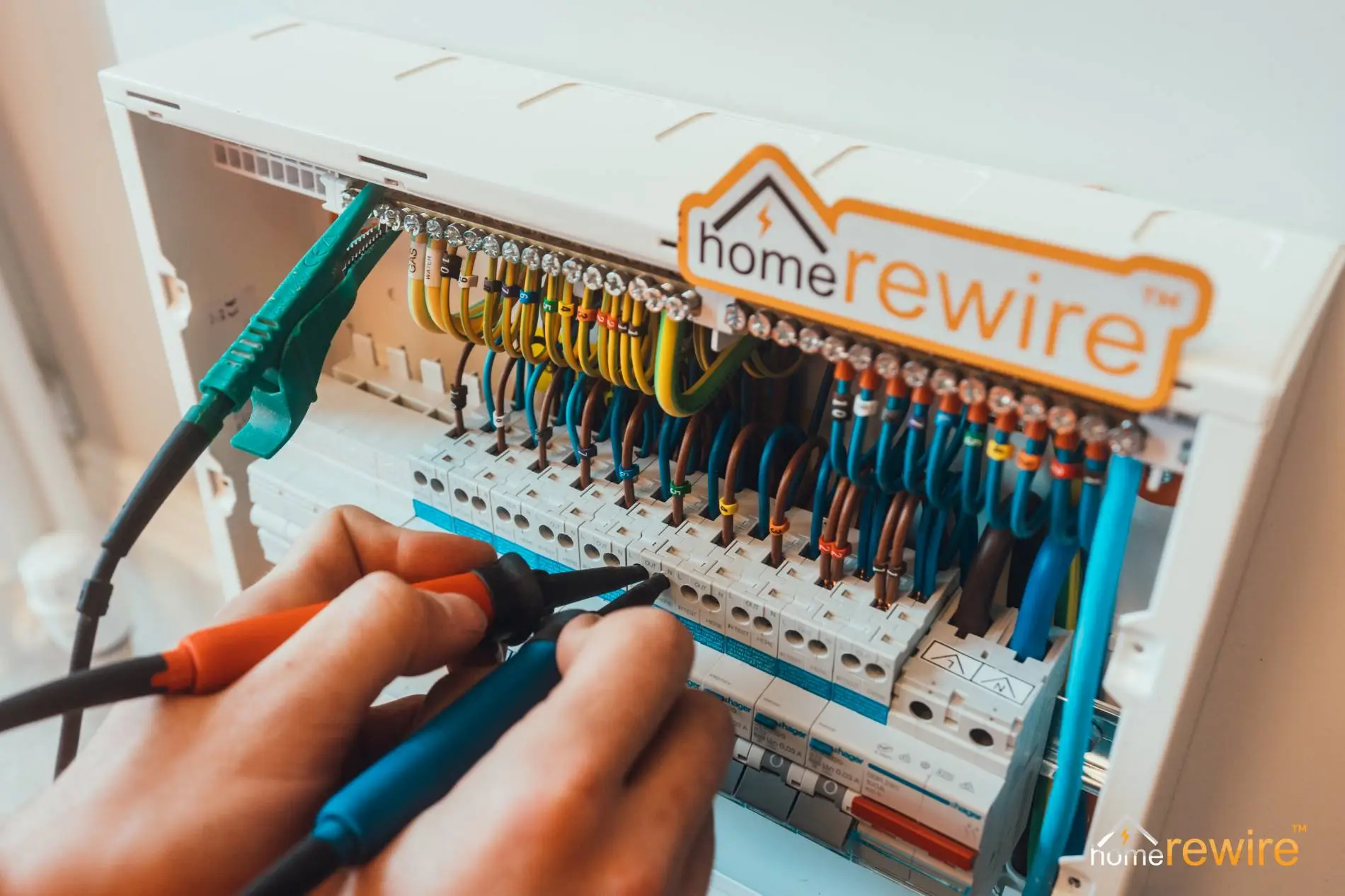
The Different Types of Circuit Breakers in the UK
- MCBs (Miniature Circuit Breakers) – protect individual circuits from overloads and short circuits.
- RCDs (Residual Current Devices) – protect people from electric shock by detecting earth leakage.
- RCBOs – combine MCB and RCD protection into one unit for each circuit.
- MCCBs and larger industrial breakers – mainly for bigger commercial or multi‑occupancy installations.
In many older houses, these modern devices are either missing or only partially installed. That’s why rewiring and upgrading the consumer unit go hand‑in‑hand: there is little point in fitting a brand‑new board packed with sophisticated protection onto wiring that is decades out of date.
Old Fuses vs Modern Circuit Breakers
A lot of Scottish properties still rely on rewirable fuse boards or very early forms of circuit protection. These may have served the house well in the past, but they were never designed for today’s loads – electric showers, induction hobs, EV chargers, home offices and more.
As Glasgow’s #1 electricians, the team at Home Rewire frequently encounters these outdated systems in local properties during initial surveys and safety inspections.
Common signs of an outdated circuit breaker setup
- Rewirable fuses with bits of fuse wire instead of modern switch‑type breakers
- No RCD test buttons on the board
- Wooden backboards, mixed‑age cabling and messy add‑ons over the years
- Labelling that is unclear, missing or obviously incorrect
These systems typically offer:
- Slower disconnection times than modern breakers
- No or very limited protection against electric shock
- A higher chance of DIY “repairs” – like putting in the wrong fuse wire – that compromise safety
As part of a full or partial rewire, replacing this with a modern consumer unit using MCBs, RCDs and RCBOs is one of the biggest single safety upgrades you can make.
The Main Circuit Breaker Types Explained
1. MCB – Miniature Circuit Breaker
An MCB is the basic building block of a modern consumer unit. It’s designed to protect the cable on a specific circuit from overloads and short circuits.
In a typical Scottish home after a rewire you might see:
- 6–10 A MCBs for lighting circuits
- 16–20 A for radial socket circuits
- 32 A for ring mains and some cookers
MCBs can be supplied with different “trip curves” (often B, C or D). Type B is standard in most domestic installations, providing good protection while coping with normal inrush currents from lights and appliances. Type C or D might be used where there are higher starting currents, such as in workshops or certain commercial settings.
2. RCD – Residual Current Device
An RCD is designed primarily to protect people rather than just the cables. It continually compares the current in the live and neutral conductors. If some of that current is leaking elsewhere – for example, through a person to earth – it trips rapidly.
RCDs are commonly used to protect:
- Socket circuits
- Bathrooms and showers
- Outdoor circuits – garages, sheds, garden rooms, hot tubs
- Kitchen circuits where water and appliances mix
In many older boards, socket circuits are not RCD protected at all. When Home Rewire upgrades a consumer unit, ensuring that key circuits have RCD or RCBO protection is a major part of bringing the system up to modern expectations.
3. RCBO – Combined MCB and RCD
An RCBO (Residual Current Breaker with Overcurrent protection) gives each circuit its own individual RCD and MCB combined. Instead of a few big RCDs protecting groups of circuits, every circuit has its own dedicated shock and overload protection.
Benefits in a rewire:
- A fault on one circuit (say an outdoor socket) doesn’t plunge half the house into darkness.
- Critical circuits like freezers, alarms or home office sockets are less affected by issues elsewhere.
- The board is easier to fault‑find because each breaker only looks after one circuit.
For many modern rewires, an “all‑RCBO” board offers the cleanest, most flexible way to protect a home.
4. MCCB and Larger Breakers
Moulded Case Circuit Breakers (MCCBs) and other high‑capacity devices appear more often in large commercial buildings, blocks of flats and industrial units than in individual homes. They handle much higher currents and have adjustable settings for fault protection.
For a domestic customer in Scotland, the key message is simple: anything at this level is specialist work. The important part is ensuring the smaller, everyday circuits in the property are correctly designed, wired and protected.
Typical Circuits and Their Protection After a Rewire
After a full rewire with a new consumer unit, the layout of circuits and breakers is usually far more logical and easier to understand than in an older installation.
Example layout in a modern rewired Scottish home
| Circuit / Area | Typical Device | Purpose |
| Upstairs lighting | 6–10 A RCBO or MCB | Protects lighting cable and fittings upstairs |
| Downstairs lighting | 6–10 A RCBO or MCB | Separates lighting upstairs/downstairs |
| Upstairs socket ring | 32 A RCBO or MCB | Ring main for upstairs power outlets |
| Downstairs socket ring | 32 A RCBO or MCB | Ring main for downstairs power outlets |
| Kitchen small appliance circuit(s) | 20–32 A RCBO | High‑demand sockets and worktop appliances |
| Cooker / hob circuit | Dedicated RCBO/MCB | High‑load cooking appliance with suitable cabling |
| Shower circuit | High‑rated RCBO/MCB | Dedicated protection for electric shower |
| Outdoor / garden supplies | RCBO | Extra shock protection for external conditions |
| Garage / outbuilding feed | RCBO / MCB + RCD | Sub‑supply to small distribution unit if required |
On older systems, multiple areas of the house might be sharing a small handful of fuses, with minimal or no RCD protection. Rewiring allows each area to be split out, correctly sized and safely protected.
How Circuit Breakers Actually Work (In Simple Terms)
Although the technology inside can be complex, the basic idea is straightforward: circuit breakers constantly monitor the current flowing in a circuit and trip when it goes beyond what’s safe.
Two main mechanisms are used in many domestic devices:
- Thermal protection – a bimetallic strip bends as it heats up under prolonged overload, eventually triggering the trip mechanism. This deals with slower‑building problems like too many appliances drawing more current than the cable can safely handle.
- Magnetic protection – a sudden, very high current (as in a short circuit) creates a strong magnetic field that snaps the breaker off almost instantly. This protects against serious faults that could otherwise cause rapid heating, arcing and fire.
RCDs and RCBOs add an extra layer by monitoring imbalance between live and neutral. If they see more than a tiny difference, they assume current is leaking somewhere unsafe and disconnect the supply very quickly.
Safety Tips for Homeowners in Older Scottish Properties
Circuit breakers and rewiring go hand‑in‑hand. Even with modern protection, if the wiring is past its best, the system is still at risk. These pointers help decide when it’s time to speak to a professional.
1. Don’t Ignore Persistent Tripping
If a breaker or RCD trips once, it may simply be an overloaded extension lead or a single faulty appliance. If it trips repeatedly, even after you unplug obvious suspects, it may point to deeper wiring issues or an under‑designed circuit.
In older houses, persistent tripping can be one of the first signs the system is no longer coping with modern usage and that a rewire or consumer unit upgrade needs to be considered.
2. Never Increase Breaker Ratings to “Solve” Nuisance Trips
Upsizing a breaker without assessing the cable and circuit design is dangerous. It allows more current to flow than the wiring was designed for, increasing the risk of overheating and fire.
On a professional rewire, the cable size, route and expected load are all calculated first, and the breaker is then chosen to match those details – not the other way round.
3. Keep the Consumer Unit Accessible and Clearly Labelled
A good modern installation makes it easy to see what each breaker controls:
- The consumer unit should be accessible, not hidden behind storage.
- Every circuit should be clearly and accurately labelled.
- Everyone in the home should know where the main switch is in case of emergency.
When an old board is replaced as part of a rewire, the opportunity is taken to tidy up, label circuits clearly and leave the installation straightforward to work on in future.
4. Test RCDs Regularly – Or Note If You Don’t Have Any
If your consumer unit has RCDs or RCBOs, they will have a test button. Pressing this should trip the device and cut power to the protected circuits. Testing at the recommended intervals helps ensure the protective mechanism is still operating correctly.
If there are no test buttons at all, that usually means you don’t have RCD protection on those circuits – a strong sign that the board and possibly the wiring are due for an upgrade.
5. Watch for Age‑Related Warning Signs in the Wiring
Even the best breakers can’t compensate for degraded insulation or very old wiring. Warning signs include:
- Rubber or cloth‑insulated cables still in use
- Sockets or switches that are discoloured, cracked or feel warm
- Buzzing or crackling noises from the consumer unit
- A burning smell near electrical accessories
- A visible patchwork of additions and alterations over many years
In many Scottish homes, a combination of these signs plus an outdated fuse board is the point at which a fresh rewire is the most sensible, long‑term solution.
If you spot any of these warning signs, we recommend contacting Home Rewire for a professional assessment to ensure your home remains safe and compliant.
When a Full or Partial Rewire Makes Sense
For many homeowners, the decision to rewire is triggered by one of a handful of situations:
- The property is 30–40+ years old and has never been rewired.
- An Electrical Installation Condition Report (EICR) highlights significant issues or deems the installation unsatisfactory.
- There are plans for major renovations – extensions, loft conversions, new kitchens or bathrooms.
- The existing consumer unit uses old fuse technology and offers little or no RCD protection.
A modern rewire typically includes:
- New, correctly sized circuits designed around how the home is used today.
- A new consumer unit with MCBs or RCBOs on each circuit.
- Comprehensive RCD protection where required by current standards.
- Clear labelling and test certification for peace of mind and insurance.
How Home Rewire Brings Circuits and Breakers Up to Date
At Home Rewire, the focus is on taking older, often overloaded electrical installations and turning them into safe, well‑designed systems built for the way people live now. That usually involves:
- Surveying the existing wiring, consumer unit and loading on each circuit.
- Designing new circuits and specifying the right mix of MCBs, RCDs and RCBOs.
- Installing a new consumer unit and rewiring circuits where needed.
- Testing, certifying and clearly labelling everything for future reference.
The result is not just a cleaner‑looking fuse board, but an electrical system that is safer, more reliable and ready for decades of use.
FAQS
Do I need a full rewire if I’m only changing my consumer unit?
Not always. If the existing cabling is modern, correctly sized and in good condition (usually confirmed via an EICR), you can often just upgrade the consumer unit to modern breakers and RCD/RCBO protection. A full rewire is typically recommended when the wiring itself is aged, damaged, or fails inspection, not just because the fuse box is old.
How long does a typical house rewire take in a lived‑in Scottish property?
For an average three‑bed house, most full rewires take around 3–7 working days depending on access, number of circuits and how much making‑good is required. Lived‑in properties usually need more careful planning, protection of furniture and staged work, which can extend the timescale slightly compared with an empty renovation.
Will upgrading my consumer unit or rewiring add value to my home?
Yes, a modern electrical installation is a strong selling point, especially for buyers concerned about safety and future renovation costs. Having up‑to‑date wiring, a new consumer unit and recent certification can make surveys smoother, reduce issues raised by solicitors or surveyors, and help justify a higher asking price compared with similar homes needing electrical upgrades.