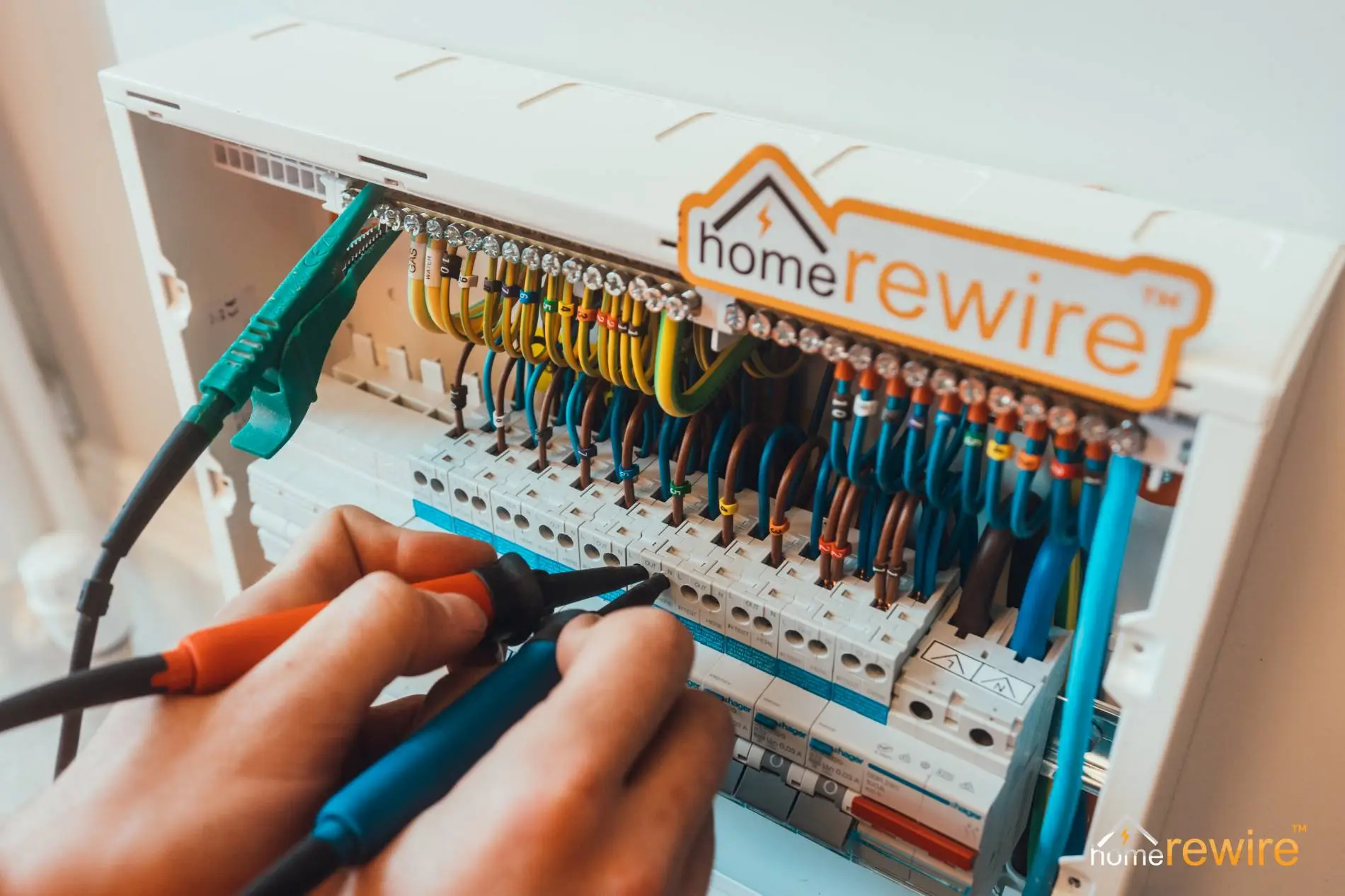
This guide from Home Rewire Glasgow explains the most common reasons a plug socket stops working, simple checks you can safely do yourself, and when it is time to call in a qualified electrician for deeper investigation, rewiring or a consumer unit upgrade.
Quick Plug Socket Checks Before You Panic
If a plug socket suddenly stops working, try a few simple checks first:
Test the appliance
Plug the same appliance into a different socket you know is working. If it still does not work, the problem may be the appliance, not the socket.
Try a different device in the suspect socket
If another device also fails to work in that socket, the issue is likely with the socket, the circuit or the wiring behind it.
Check for other dead sockets nearby
If several sockets in the same area are out, you may be dealing with a tripped breaker, RCD or a fault on the circuit rather than one faulty outlet.
If these checks point to a wiring or circuit issue, avoid repeated testing with multiple devices. That can make the fault worse – especially if there is heat damage building up behind the socket.
1. Tripped Circuit Breaker or RCD
One of the most common reasons for multiple sockets not working is a tripped circuit breaker or RCD in the consumer unit.
What to look for
- A breaker switch in the consumer unit in the “off” or middle position
- An RCD that has tripped and will not reset
- Only a certain group of sockets or areas of the house affected
What to do
- Turn off and unplug any obvious high‑load appliances (kettles, heaters, irons, etc.).
- Try resetting the affected breaker or RCD once.
- If it trips again immediately, there is likely an underlying fault – stop resetting it and call an electrician.
Repeated tripping can indicate an overloaded circuit, a faulty appliance, moisture in the wiring or damaged cables. If this is a recurring issue, it is worth having the wiring and consumer unit checked, and in older properties, discussing options for a consumer unit replacement or house rewiring.
2. Faulty or Worn‑Out Socket
If only one socket is not working while others on the same wall or room are fine, the outlet itself may have failed.
Warning signs
- Only one side of a double socket works
- The socket feels loose, cracked or discoloured
- You hear crackling or buzzing when you plug in
- There is a fishy or burning smell from the outlet
This usually means there are loose or burnt connections behind the front plate or the internal contacts have worn out. The faceplate might look fine from the front, but heat damage or arcing could already be present at the back.
Why it matters
Loose connections and overheated terminals are a fire risk. Simply ignoring the problem or forcing plugs in and out will not fix it and can make things worse. A qualified electrician can remove the socket, check the wiring behind and replace the outlet safely. If similar issues appear at multiple points, that may point towards more widespread wiring problems.
3. Damaged or Loose Wiring on the Circuit
Over time, connections in sockets and junction boxes can work loose, especially on heavily used circuits like kitchen and living room sockets. Cables can also be damaged by DIY work, furniture being pushed against them, or simple age.
Typical symptoms
- One or more sockets on the same wall or circuit stop working
- The problem is intermittent – sometimes the socket works, sometimes it doesn’t
- Breakers or RCDs trip occasionally when certain sockets are used
Loose or damaged conductors can cause overheating, arcing and eventual failure of part or all of the circuit. In older properties, this is often a sign that the wiring is coming to the end of its useful life.
At this stage, a DIY fix is not recommended. A professional will need to test the circuit, locate the fault and repair or rewire the affected section. Home Rewire Glasgow regularly finds hidden damage during electrical fault‑finding that would not be visible without removing sockets and testing.
4. Overloaded Circuits and Extension Leads
Many dead sockets and tripped breakers are caused not by a fault in the socket itself, but by how the circuit is being used.
Common overload culprits include:
- Multiple high‑power appliances on one double socket via a multi‑way adaptor
- Electric heaters, tumble dryers or kettles on already busy ring mains
- Daisy‑chained extension leads running several devices at once
When the current drawn exceeds what the circuit and protective devices are designed for, the breaker or fuse will trip. This protects the wiring from overheating, but repeated overloading is a strong sign that the circuit design is no longer suitable for modern usage.
In some older Scottish homes, a complete rewire or additional circuits may be the best long‑term fix, especially if the electrical layout has not been updated for decades.
5. Old or Unsafe Wiring
If your home still has very old wiring or an outdated consumer unit, a dead socket might be a symptom of a much bigger problem.
Signs of ageing wiring and equipment
- Rubber‑sheathed or cloth‑covered cables in use
- A fuse box with rewirable fuses instead of modern breakers
- No RCD protection on socket circuits
- Mixed ages and types of wiring around the house
- Frequent nuisance tripping, especially when several appliances run together
As insulation breaks down and connections age, sections of the circuit can fail, causing sockets to stop working or behave unpredictably. In some cases, this will only be discovered when a fault occurs.
In these situations, the safest and most cost‑effective solution is often a full or partial house rewire combined with a new consumer unit. Home Rewire Glasgow specialises in upgrading older properties, replacing tired circuits and fuse boards with modern, safe installations that can handle today’s electrical demands.
6. Issues Inside the Consumer Unit
Sometimes the problem is not at the socket or in the cable run, but inside the fuse box or consumer unit itself.
Possible issues include:
- Loose connections on the circuit breaker terminals
- A failing or burnt‑out breaker
- Old fuse carriers or busbars showing signs of heat damage
- Poor‑quality or incorrectly installed RCDs that nuisance‑trip
These faults should only ever be investigated by a qualified electrician. If your sockets stop working and you can see obvious discolouration, heat marks or damage inside the consumer unit, do not touch anything – turn off the main switch and contact an electrician immediately.
If the board is very old, or uses a mix of old fuses and newer parts, it is usually worth discussing a complete consumer unit replacement with new MCBs and RCD/RCBO protection.
Simple Things You Can Safely Check
Before calling an electrician, there are a few low‑risk checks you can make:
- Confirm the appliance works in another socket.
- Check the consumer unit to see if a breaker or RCD has clearly tripped.
- Reduce load on heavily used extension leads or adaptors.
- Avoid using obviously damaged sockets, and do not take the front off to “have a look” if you are not qualified.
If the cause is not obvious, or things keep tripping or failing, it is safer – and usually cheaper long term – to bring in a professional rather than guessing.
When to Call Home Rewire Glasgow
Contact Home Rewire Glasgow promptly if:
- You have multiple sockets not working and can’t reset the breakers safely.
- A socket is cracked, discoloured, warm, smells of burning, or makes buzzing noises.
- Circuits trip frequently, especially when you use common household appliances.
- Your home has very old wiring or a dated fuse box and sockets are starting to fail.
Home Rewire Glasgow can:
- Fault‑find and repair socket and circuit issues
- Advise on whether your wiring and consumer unit are still safe and fit for purpose
- Carry out full or partial rewires where needed
- Replace outdated consumer units with modern, safer boards
FAQS
Is it safe to keep using other sockets if one has stopped working?
If a single socket has failed but others still work, you might be able to use them short‑term, but it’s a warning sign you shouldn’t ignore. A dead outlet can mean loose connections, heat damage or ageing wiring on that circuit, so it’s best to avoid heavy loads on nearby sockets and get the fault checked by a qualified electrician.
Could a faulty appliance be the reason my socket isn’t working?
Yes. A failing appliance can trip a breaker or RCD and make it look like the socket has died, when the real problem is what’s plugged into it. If power comes back after you unplug everything and reset the breaker once, then trips again only when a particular item is used, that appliance is likely the culprit and should be repaired or replaced.
Will replacing the socket fix the problem for good?
Replacing a cracked or clearly worn outlet usually solves simple, local faults, but it won’t fix issues caused by old wiring, overloading or a struggling consumer unit. If you’re seeing burnt marks, frequent tripping or multiple sockets failing over time, that’s a strong indication the wider wiring or fuse box needs professional attention, not just a new faceplate.