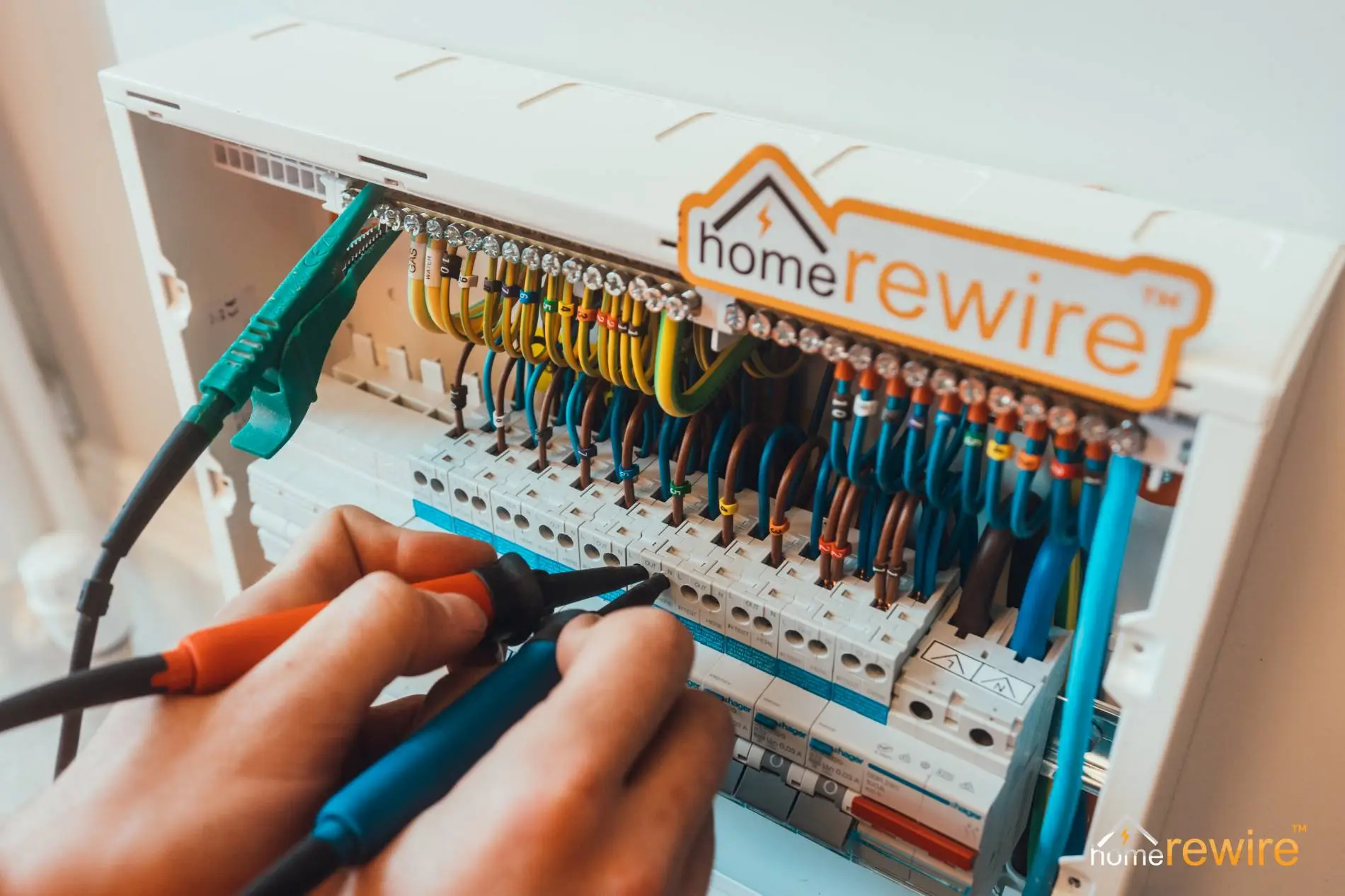
This guide sets out what you should expect to pay across Scotland this year, what pushes the price up, and what happens after the report lands.
How much does an EICR cost in Scotland?
For most homes in Scotland in 2026, £150 to £350.
Small flats sit near the bottom. Larger or older houses sit near the top. Properties with more than one consumer unit, an outbuilding, or awkward access can go above it.
EICR prices by property size
| Property | Typical circuits | 2026 price |
|---|---|---|
| Studio or 1 bed flat | 4–8 | £120–£180 |
| 2 bed flat | 6–8 | £150–£220 |
| 3 bed house | 10–14 | £180–£280 |
| 4 bed house | 12–16 | £250–£380 |
| 5+ bed or HMO | 15+ | £330–£470 |
| Each additional consumer unit | — | add £40–£70 |
Why is circuit count more important than bedrooms?
Because circuits are what get tested. Every one needs continuity, insulation resistance, loop impedance and RCD checks, and each of those takes time regardless of which room it feeds.
A three-bed flat with twelve circuits is a longer job than a four-bed house with eight. Several Scottish firms have moved to circuit-based pricing for exactly this reason: a base fee covering the board and the first five circuits, then roughly £15 for each one after that.
How much does an EICR cost in Glasgow, Edinburgh and other Scottish cities?
Advertised starting prices vary noticeably by area, and the realistic range varies more.
| Area | Advertised from | Average Cost |
|---|---|---|
| Edinburgh | £140 | £160–£440 |
| Aberdeen | £120 | £180–£470 |
| Glasgow | £115 | £150–£350 |
| Inverness | £115 | £150–£350+ |
| Dundee | £110 | £150–£320 |
| East Kilbride | £110 | £145–£310 |
| Paisley | £105 | £140–£300 |
| Ayr | £105 | £140–£255 |
| Highlands and Islands | Varies | Quote only |
Treat the left-hand column with care. Those figures describe the smallest job on the books, usually a studio with a single board. Market analysis of scheme-registered electricians in Aberdeen this year puts a one-bed flat at £230 to £305 and a four-bed at £350 to £470, well clear of the £120 headline. That difference reflects insurance, registration, audit and proper time on site rather than anything underhand.
Why is an EICR more expensive in Edinburgh?
Capital city labour and overheads. Trade rates in Edinburgh sit around 10% above the UK average. The housing stock plays a part too, with Victorian tenements and sandstone terraces taking longer to inspect than a modern estate.
Why is Aberdeen so expensive?
Inspection rates in Aberdeen run about £58 to £78 an hour. Decades of oil and gas demand pulled skilled trade rates up across the North East and they have not come back down.
What about Glasgow?
Glasgow sits in the middle with a genuinely wide spread. The city has pre-1919 tenements, post-war schemes and 2000s new builds within a few streets of each other, so there is no single going rate. A Shawlands tenement flat and a Newton Mearns detached house are different jobs with different prices.
Why are Highland and island prices unpredictable?
Travel. Hourly rates are not necessarily higher, but coverage is thinner and lead times are longer. Mileage charges are common. For island properties, ferry costs and overnight stays get built into the quote. Book early.
What is an EICR?
An Electrical Installation Condition Report is a formal inspection and test of the fixed wiring in a building. Sockets, lighting circuits, the consumer unit, earthing, bonding, showers, cookers, outbuildings. Everything wired in, as opposed to plugged in.
The electrician tests each circuit individually, records the readings, and issues a report against BS 7671, the national wiring standard. Any problems get a code. The overall result is either Satisfactory or Unsatisfactory.
Is an EICR the same as an electrical safety certificate?
In everyday use, yes. Letting agents, councils and lenders in Scotland all mean the EICR when they ask for an electrical safety certificate. The formal name is the one printed on the document.
Worth knowing: an EICR is different from an Electrical Installation Certificate (EIC). An EIC is issued for new work you’ve had done. An EICR assesses what’s already there.
What does an EICR include?
Any quote you accept should cover:
- Visual inspection of the whole fixed installation
- Dead and live testing on every circuit
- Consumer unit, earthing and main protective bonding checks
- RCD operation testing
- A completed BS 7671 report including schedules of test results
- A code against every observation
- An itemised quote for anything that needs fixing
What if the quote doesn’t mention schedules of test results?
Then it isn’t a full EICR. The schedules are the evidence. Without them you have an opinion rather than a report, and letting agents and lenders will often reject it. Ask before booking.
How long does an EICR take?
Two to four hours for most homes. A studio can be done in well under two. A large older house with two boards can take the best part of a day. Reports usually arrive within 24 to 48 hours.
If someone is in and out in forty minutes on a three-bed, something has been skipped.
What do the EICR codes mean?
C1 — Danger present
An immediate risk of injury. The electrician should make it safe before leaving. Exposed live parts, for example.
C2 — Potentially dangerous
Not dangerous right now, but it could become so. This is the code that most commonly triggers an Unsatisfactory result. No RCD protection and missing earth bonding both fall here.
C3 — Improvement recommended
Not a fail. You are allowed to leave a C3 alone indefinitely.
FI — Further investigation required
Something could not be fully assessed and needs more work to reach a conclusion.
What makes an EICR unsatisfactory?
Any C1, C2 or FI. C3 observations on their own do not. If you have been handed an Unsatisfactory report and every observation on it is a C3, ask the electrician to justify the result in writing.
How much does EICR remedial work cost?
The inspection fee pays for the inspection. Repairs are quoted separately, which is normal and not a bait and switch, because nobody can price unknown faults in advance.
| Remedial work | 2026 cost |
|---|---|
| Minor fix, damaged socket or loose connection | £50–£100 each |
| Main protective bonding to gas and water | £120–£250 |
| Consumer unit, 3 bed, 10–14 way all-RCBO with SPD | £460–£720 |
| Consumer unit, 4 bed, 14–18 way with SPD | £720–£865 |
| Consumer unit, HMO, with AFDDs where required | £790–£1,010 |
| Tails upgrade and meter coordination | add £80–£180 |
| Partial rewire | £1,200–£2,500 |
| Full rewire | £2,000–£6,000+ |
Do I have to use the same electrician for the repairs?
No. The report belongs to you. Take it anywhere and get the remedials priced by whoever you like.
Say so early if you are shopping around, because it changes how the conversation goes. Firms that make their money on remedials rather than inspections tend to price the inspection very low, and knowing you might walk keeps everyone honest.
Why is my consumer unit quote higher than it was two years ago?
The 2026 amendment to the wiring regulations. See below.
What changed in 2026?
BS 7671:2018+A4:2026 brought in updated model forms, new columns on the schedules, changes around TN-C-S earthing arrangements, and broader requirements for arc fault detection devices.
For the inspection itself, most people will notice nothing at all. The difference shows up on board upgrades, particularly in HMOs and rented property, where AFDD requirements can add a few hundred pounds against a quote from 2024. If you are comparing an old estimate to a new one and the gap looks unreasonable, this is usually the explanation.
One practical point: reports issued now should be on the current model forms. Paperwork from a superseded edition is worth querying.
Do landlords in Scotland legally need an EICR?
Yes, and the rules here are not the English rules.
The Electrical Safety Standards in the Private Rented Sector (England) Regulations 2020 have no effect in Scotland. Scottish duties come from the Housing (Scotland) Act 2006 and the Repairing Standard, which require an EICR every five years assessed against BS 7671, and before the start of any new tenancy.
What else does the Repairing Standard require?
- Appliance testing. The EICR covers fixed wiring. Appliances you supply also need PAT testing. Tenant-owned appliances are not your responsibility.
- RCD protection. At least one RCD rated no higher than 30mA in the main consumer unit. Without one the property fails the Repairing Standard outright.
- Record keeping. Hold on to EICRs and PAT reports for six years.
- Cost. Tenants cannot be asked to pay towards the inspection.
What happens if a landlord doesn’t comply?
Enforcement runs through the First-tier Tribunal for Scotland, Housing and Property Chamber. The Tribunal can issue a Repairing Standard Enforcement Order and apply a rent penalty. Tenants can refer a failure to comply directly.
Who can carry out an EICR in Scotland?
A competent person, which in practice means an electrician registered with NICEIC, NAPIT or SELECT. SELECT is the Scottish trade body for electrical contractors.
A report from an unregistered operator will not satisfy a council, a letting agent, a lender’s solicitor or the Tribunal, no matter how cheap it was. Check registration before you book, not after.
Does Scotland use different regulations generally?
Scotland works under Building Standards rather than England’s Building Regulations. A contractor who quotes you on the basis of English rules may not be across the differences.
Do homeowners need an EICR?
There is no legal requirement if you own and live in your home. Every ten years is the general recommendation, and sooner for an older property.
The case for doing it in Scotland is stronger than the law suggests. Much of the housing here predates modern wiring standards, and a great many homes have picked up partial rewires, electric showers and converted attic rooms piecemeal across decades, often with no paperwork. An EICR tells you what is genuinely behind the walls.
When is the best time to get one as a homeowner?
Before you sell, before you buy, and before any significant renovation. Finding out about a rewire after the new kitchen is fitted is an expensive way to learn.
How much does a commercial EICR cost?
Commercial jobs are priced per point rather than per property. Expect £16 to £24 for each socket, light fitting or item of fixed equipment, with a minimum charge.
A small shop or office often works out close to domestic pricing. A warehouse, restaurant or large HMO scales up quickly because of the sheer number of points.
Commercial duties come from health and safety legislation rather than the Repairing Standard, so the pressure usually comes from your insurer as much as anything else.
How can I reduce the cost of an EICR?
- Book the EICR and PAT together. One visit instead of two.
- Test between tenancies. An empty flat is faster to test than an occupied one.
- Group your properties. Several addresses in one area on one day will always price better than separate call-outs.
- Clear access first. Consumer unit, loft hatch, sockets behind furniture.
- Find the last report. Knowing the history saves time on site.
- Avoid same-day bookings. Urgent slots usually carry a surcharge.
- Compare what’s included, not just the headline. Two quotes £80 apart often cover different work.
Can Home Rewire handle the whole job?
Yes. That is the main reason people come to us rather than to an inspection-only outfit.
Plenty of firms will test your property, hand you a list of C2s and leave you to find someone else to fix them. We inspect, we quote, and we carry out the work ourselves, so there is no second contractor to chase and no gap between the report and the repair.
What we do
Inspection and certification. EICRs for homes, rentals, HMOs and commercial premises. PAT testing. Landlord certificate packages. EICs for new work.
Remedial work. Anything the report throws up, from a single damaged accessory to full main protective bonding.
Consumer units. Board replacements to the 2026 amendment, including RCBO boards, SPD and AFDD provision where required.
Rewiring. Partial and full rewires, which is where we started and still what we are best known for. Tenement flats, period properties and new builds.
Everything else electrical. Additional circuits, EV chargers, electric showers, outdoor and garden supplies, fault finding, emergency lighting, landlord portfolio contracts.
How does a full-service quote work?
We give you a fixed price for the inspection up front, based on your actual property rather than a teaser rate. If the report comes back Unsatisfactory, you get an itemised remedial quote, coded line by line, with no obligation to accept it. If you do go ahead, the same team comes back and does the work.
FAQS
Which Scottish city is dearest for an EICR?
Edinburgh and Aberdeen. Dundee, Paisley and Ayrshire come in lower.
How often does a Scottish landlord need an EICR?
Every five years, and before each new tenancy.
Is the EICR law the same as England’s?
No. Scotland uses the Housing (Scotland) Act 2006 and the Repairing Standard. The five-year interval is similar but the framework, enforcement route and appliance duty differ.
Does the price include repairs?
No. Inspection and report only. Minor remedials start around £50, a consumer unit from about £460.
Can I charge my tenant for the EICR?
No.
Is a C3 a fail?
No.