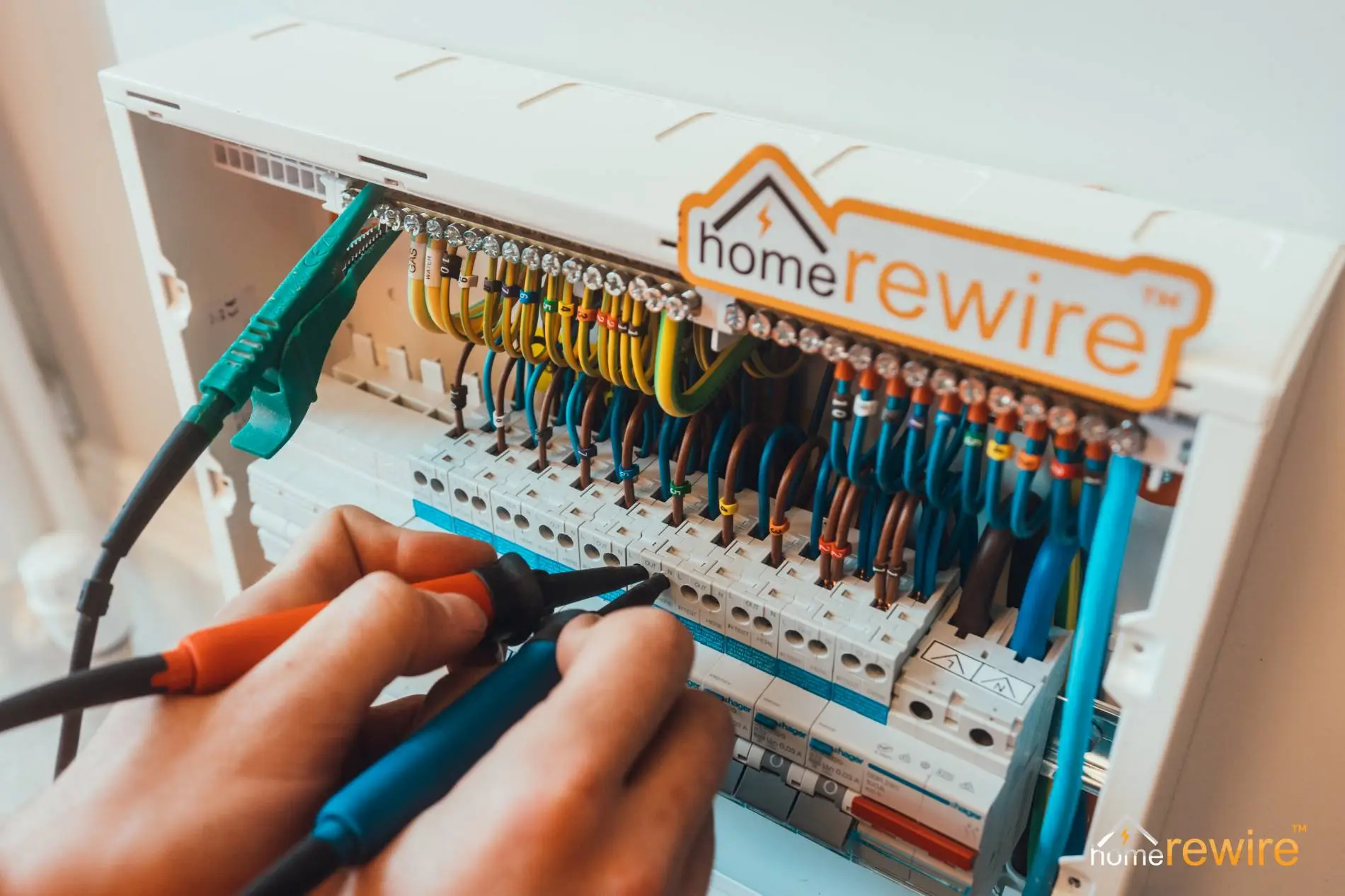
Renting out a property comes with real legal obligations, and the electrical side of things catches more landlords off guard than almost anything else. Whether you’ve just acquired a buy-to-let or you’ve been renting the same flat for fifteen years, the rules have tightened considerably over the last decade.
This guide covers what’s legally required, what the consequences of non-compliance look like, and how to know whether your property needs a rewire.
What Are the Electrical Requirements for Rental Properties in Scotland?
Scottish landlords must ensure their rental properties meet specific electrical safety standards under the Housing (Scotland) Act 2006 and associated regulations. The core obligations are:
- EICR (Electrical Installation Condition Report): A qualified electrician must inspect the property’s fixed electrical installation and issue a report. In Scotland, this is required at change of tenancy and at least every five years.
- PAT Testing: Portable appliances provided by the landlord must be tested and confirmed safe.
- Working smoke alarms: At least one smoke alarm in every room used as a living room, one in every hallway or landing, and one heat alarm in the kitchen. All must be interlinked.
- Carbon monoxide detectors: Required in any room with a carbon-fuelled appliance or flue.
- RCD protection: Modern installations must include residual current device protection. Older consumer units that lack this will typically fail an EICR.
The regulations in Scotland are broadly similar to those in England and Wales but are enforced through separate legislation. If your property is registered under the Private Residential Tenancy framework, compliance isn’t optional.
What Is an EICR and Why Does Every Landlord Need One?
An Electrical Installation Condition Report is a formal assessment of a property’s fixed wiring, consumer unit, earthing, bonding, and associated components. A qualified electrician inspects everything that’s built into the property and grades any issues found.
The grading system works like this:
| Code | Meaning | Action Required |
| C1 | Danger present | Immediate remedial work |
| C2 | Potentially dangerous | Urgent remedial work |
| C3 | Improvement recommended | Not required, but advised |
| FI | Further investigation required | Must investigate before passing |
A C1 or C2 on an EICR means the installation has failed. The landlord must arrange remedial work and obtain written confirmation from an electrician before the property can be let or remain occupied. Failing to act on a C1 or C2 isn’t just a compliance issue, it’s a liability issue if something goes wrong.
EICRs in Scotland are valid for up to five years or until change of tenancy, whichever comes first. Buying a property that hasn’t had one recently? Get one done before anyone moves in.
How Old Does Wiring Have to Be Before It Becomes a Problem?
There’s no fixed age at which wiring automatically fails, but electrical installations do degrade over time. The materials used, how heavily the system has been used, and how it’s been maintained all play a role.
| Wiring Type / Era | Typical Concern | Likely Outcome on EICR |
| Rubber-insulated (pre-1960s) | Brittle, cracked insulation; fire risk | C1 or C2, likely fail |
| PVC wiring (1960s–1980s) | May lack earthing, outdated consumer unit | C2 common, may fail |
| PVC wiring (1980s–2000s) | Often missing RCD protection | C2 or C3, partial fail |
| Modern installation (post-2000s) | Usually compliant if maintained | Pass, subject to condition |
Rewiring becomes the only viable option when remedial repairs cost more than the rewire itself, or when the installation has deteriorated beyond piecemeal repair. An electrician doing an honest EICR will tell you which situation you’re in.
If you want to understand the typical lifespan of different wiring systems in more detail, it’s worth reading our guide on how long electrical wiring lasts in a house and when a full rewire is needed.
Does Your Rental Property Actually Need a Full Rewire?
Signs that lean toward yes:
- The property has rubber or lead-covered wiring
- The consumer unit is old-style fuse wire rather than modern MCBs
- There’s no RCD protection at all
- Sockets and switches are the old round-pin style
- Previous EICR results included multiple C1 or C2 codes
- The property has had no electrical work done in 25+ years
A C3 code means improvement is recommended but not mandatory. Multiple C3s, especially on an ageing system, often indicate that a full rewire is the more sensible long-term investment compared to patching individual circuits.
Thinking about a rewire for your rental property? Request your free rewire quote from HomeRewire.
What Are the Consequences of Non-Compliance for Landlords?
Non-compliance isn’t a grey area. Local authorities in Scotland have enforcement powers under the Housing (Scotland) Act 2006, and the consequences for landlords who ignore electrical obligations can be significant.
- Repairing Standard notices: Councils can issue a Repairing Standard Enforcement Order, requiring work to be completed within a specified timeframe.
- Rent relief orders: Tenants can apply for rent relief if a property doesn’t meet the Repairing Standard, which can result in a landlord losing up to 90% of rent during the period of non-compliance.
- Landlord registration: Scotland’s landlord register requires landlords to be “fit and proper.” Persistent non-compliance can result in registration being revoked.
- Criminal liability: In cases of fire or injury linked to a known electrical defect, landlords face potential criminal prosecution.
The financial and reputational cost of getting this wrong vastly outweighs the cost of sorting the electrics properly.
Are Landlords Required to Rewire Between Tenancies?
No, there’s no legal requirement to rewire between every tenancy. The requirement is that the electrical installation meets the Repairing Standard and passes an EICR at change of tenancy.
If the installation passes, no action is needed. If it fails with C1 or C2 codes, remedial work is required before the next tenant moves in. Whether that means targeted repairs or a full rewire depends on what the EICR found and the age of the installation.
Can Tenants Request an EICR?
Yes. Tenants in Scotland have the right to request the most recent EICR from their landlord. Landlords are required to provide a copy within 28 days of a written request. If the landlord fails to do so, or if the report reveals a C1 or C2 issue that hasn’t been addressed, the tenant can refer the matter to their local authority.
Practically, this means landlords should keep EICR documentation organised and up to date. An EICR issued on work done years ago by a previous owner isn’t useful if it’s out of date or predates significant changes to the property.
Get a Free Rewire Quote for Your Rental Property
If your rental property has old wiring, a history of EICR failures, or you’ve just bought somewhere that needs bringing up to standard, HomeRewire can help. As Scotland’s number one rewiring contractor and the busiest rewire specialist in Glasgow, we’ve completed over 6,000 rewires and know how to get the job done fast without cutting corners.
Most full house rewires are completed in 1 to 2 days. All work is certified to BS 7671. And the quote is completely free.
Request your free rewire quote from HomeRewire today.
Frequently Asked Questions
Do Scottish landlords need an EICR every year?
No. In Scotland, an EICR is required at every change of tenancy and at least every five years, whichever comes sooner. Annual testing is not a legal requirement, though some landlords choose to do it.
Can I use any electrician to carry out an EICR?
The electrician must be competent and qualified to carry out the inspection. In practice, this means using a registered electrician from a recognised scheme such as SELECT (Scotland’s equivalent of NICEIC) or NICEIC directly. An EICR from an unqualified person has no legal standing.
What happens if I buy a rental property with old wiring?
You’re responsible for bringing it up to standard before letting it out. If the existing EICR is out of date or the installation fails inspection, you’ll need to arrange remedial work or a full rewire before any tenancy begins.
Is the landlord responsible for tenant-owned appliances?
No. Landlords are responsible for the fixed electrical installation and any appliances they provide. Tenant-owned appliances are the tenant’s responsibility, though landlords should ensure sockets and wiring are in safe condition.