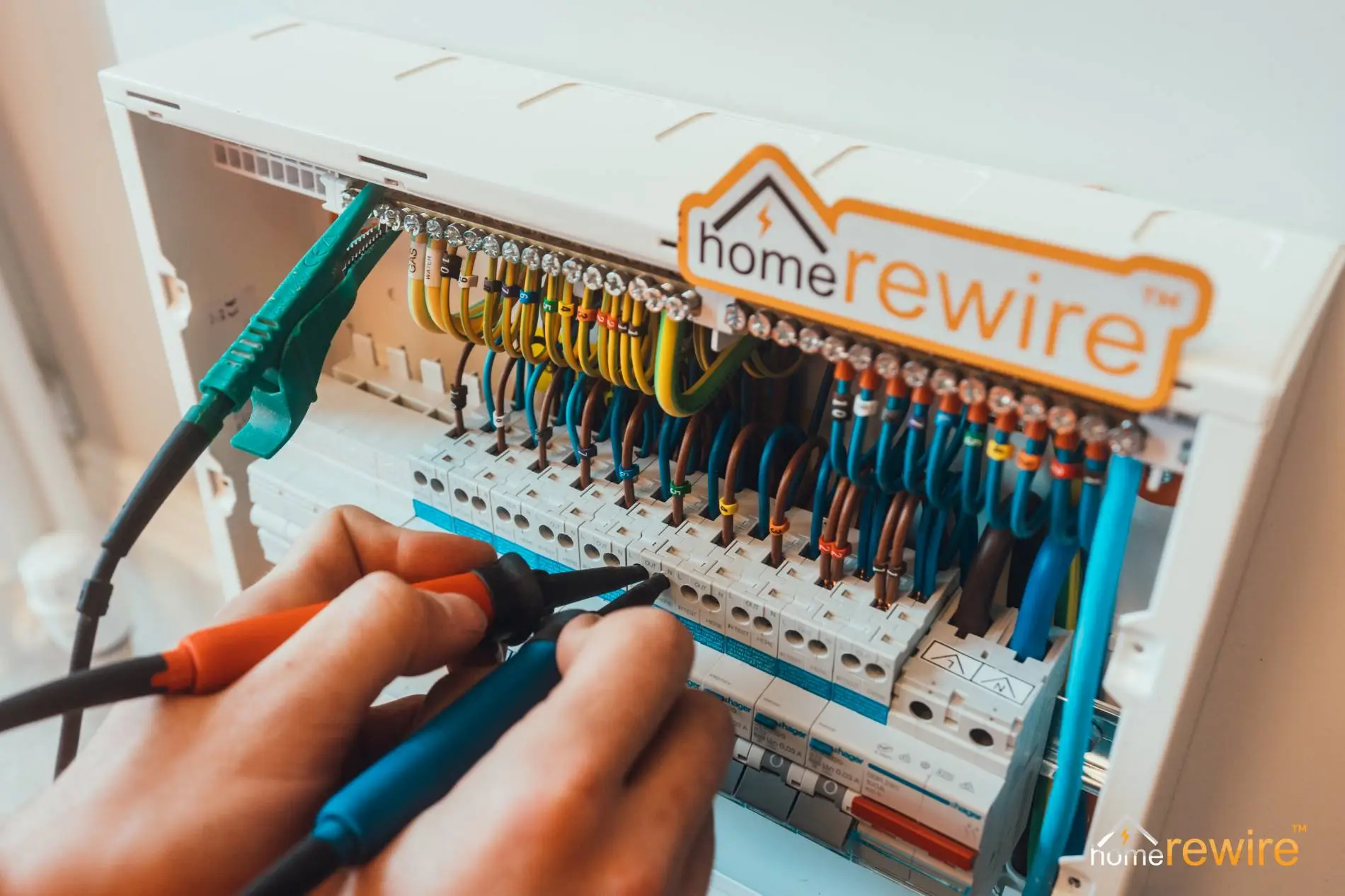
This guide from Home Rewire – Glasgow’s number one electricians for house rewiring and consumer unit upgrades – explains the most common causes of flickering lights, what you can safely check yourself, and when it is time to pick up the phone.
Lights Flickering – Start with the Basics of Bulb or Fitting Issue
Not every flicker is a serious fault. A lot of minor problems start with the bulb or fitting.
Simple checks you can do
Loose bulb
If a bulb is not fully seated in its holder, it may flicker as it loses and regains contact. Turn the light off, let the bulb cool, and gently tighten it.
Failing bulb
Old or failing bulbs – especially some cheap LEDs – can start to flicker before they finally give up. Swapping in a new, good‑quality bulb is an easy test.
Dirty or corroded lampholder
In older fittings, especially in damp or outdoor areas, corrosion on the contacts can cause poor connection and intermittent flicker. The safest long‑term fix is usually to have the fitting cleaned or replaced by an electrician.
If changing or tightening the bulb doesn’t solve the issue, it is time to look further up the chain.
Common Causes of Flickering at the Switch
When the light itself and the bulb are fine, the problem often sits with the switch or the wiring around it.
1. Worn or Faulty Light Switch
Light switches get used constantly, and the internal contacts can wear out over time.
Typical signs include:
- The lights flicker when you touch or wiggle the switch
- The switch feels loose, stiff or “crunchy” when operated
- You have to press or rock it a certain way for the light to stay on
In this case, the internal mechanism is no longer making a clean, solid connection. The safest fix is to replace the switch. This is a straightforward job for a qualified electrician, and in many older properties Home Rewire will recommend upgrading tired switches as part of wider electrical work.
2. Loose Connections Behind the Switch
Even if the front of the switch looks fine, the wires at the back can work loose over the years, especially in busy rooms such as halls, kitchens and living rooms.
Warning signs:
- Flicker that gets worse when the switch or surrounding wall is knocked
- Occasional “pop” or crackle from the switch area
- Heat or discolouration around the switch plate
Loose connections can cause arcing – tiny sparks that generate heat and can damage both the switch and the cable. This is not a DIY job. The power should be isolated and the switch removed so a professional can inspect and re‑terminate or replace the wiring as needed.
Home Rewire’s electricians see this regularly in older Glasgow homes and often find that one “simple” flickering switch reveals a pattern of loose or tired connections elsewhere.
3. Dimmer Switch and LED Compatibility
If your lights flicker mainly when dimmed, the issue may be down to a mismatch between the dimmer and the bulbs.
Common problems:
- Older dimmer switches designed for incandescent lamps being used with LED bulbs
- Non‑dimmable LEDs being used on a dimmer circuit
- Mixed bulb types on the same dimmer
The fixes usually involve:
- Using only dimmable LEDs on dimmer circuits
- Upgrading to a modern LED‑compatible dimmer switch
- Keeping each dimmer circuit to one type and brand of bulb where possible
As part of upgrades or rewiring projects, Home Rewire can replace older dimmers with modern, LED‑ready controls that work properly with today’s lighting.
When Flickering Points to Wiring or Circuit Problems
If you have ruled out simple bulb and switch issues, flickering may be telling you that something deeper in the electrical system needs attention.
4. Loose or Damaged Wiring
Loose terminations or damaged cable at the light fitting, junction boxes or elsewhere on the circuit can all cause intermittent contact and flicker.
Signs to take seriously:
- Multiple lights on the same switch or circuit flicker together
- Flicker is random, not just when the switch is touched
- You notice buzzing, crackling or a faint burning smell
In this situation, there could be arcing at a loose joint or damage hidden above ceilings or behind fittings. An electrician will need to test the circuit, open up fittings and boxes, and repair or replace any suspect sections. In many older Glasgow and Scottish properties, this kind of fault‑finding often highlights wiring that is generally past its best, not just a one‑off problem.
5. Overloaded or Undersized Circuits
If your lights dim or flicker when high‑power appliances start up – kettles, washing machines, tumble dryers, electric showers – it can be a sign that the circuit is working at or beyond its comfortable limits.
Typical scenarios:
- Kitchen lighting on the same circuit as several heavy‑load appliances
- Older houses where new loads have been added to circuits that were never designed for them
- Multiple extension leads feeding plug‑in heaters, dryers or similar
Short‑term voltage dips can be normal, but persistent or severe flickering when appliances run suggests it is worth having the circuit design checked. In some cases, installing dedicated circuits or upgrading the consumer unit may be recommended. In others, a full or partial house rewire from Home Rewire is the best long‑term solution.
6. Old Wiring and Outdated Consumer Units
In many properties across Glasgow, flickering lights are one of the first signs that the wiring and fuse box are simply getting too old for modern use.
Red flags include:
- Rubber‑sheathed or cloth‑covered cables still in use
- A fuse box with rewirable fuses instead of modern circuit breakers
- Little or no RCD protection on lighting and socket circuits
- A history of nuisance tripping, dead sockets or lights, and DIY additions
As insulation ages and connections deteriorate, lighting circuits can become unstable, leading to flicker, blown lamps and unexplained faults. Replacing the odd switch or fitting may give a temporary improvement, but it does not address the root cause.
This is where Home Rewire Glasgow really comes in. As specialists in full and partial rewires and consumer unit replacements, the team can assess the overall condition of your installation and advise whether targeted repairs are enough, or whether a more comprehensive upgrade is the safer, more cost‑effective route.
How Replacement Consumer Units Help
A modern consumer unit (fuse box) with correctly rated MCBs and RCD/RCBO protection will not, by itself, fix a faulty switch or loose bulb, but it plays a critical role in overall stability and safety.
Benefits of a new consumer unit from Home Rewire include:
- Faster, more reliable disconnection if faults develop on lighting circuits
- Proper RCD/RCBO protection that reduces shock risk and flags issues quickly
- Clearer separation of circuits (for example, upstairs vs downstairs lighting) to simplify fault‑finding
- Modern, metal‑clad enclosure that meets current safety standards
When combined with sound wiring and properly installed switches and fittings, a new board makes it much easier to identify and deal with issues like flickering, rather than living with a patchwork of old fuses and mystery alterations.
What You Can Safely Check – And What You Shouldn’t
Safe DIY checks:
- Try a known‑good bulb in the fitting.
- Make sure the bulb is properly seated.
- Note when the flicker happens – all the time, only when dimming, or only when certain appliances run.
- Look (without opening anything) for obvious damage, scorching or looseness at switches and fittings.
Things best left to the professionals:
- Removing switches or fittings to check wiring
- Working inside junction boxes or ceiling roses
- Opening or working inside the consumer unit
- Any investigation where you can smell burning or hear crackling
If in doubt, switch off the affected circuit and call an electrician rather than taking chances.
When to Call Home Rewire – Glasgow’s Number One Electricians
It is time to get Home Rewire Glasgow involved if:
- Lights continue to flicker after bulbs have been checked or replaced
- Flickering gets worse when you touch the switch or fitting
- You see any signs of heat, burning or discolouration around switches or fittings
- Multiple lights on the same circuit are affected
- Your home has very old wiring or an outdated fuse box
Home Rewire can:
- Diagnose and fix faulty switches, dimmers and light fittings
- Track down and repair loose or damaged wiring on lighting circuits
- Assess whether your consumer unit and wiring are still safe and suitable
- Carry out consumer unit replacements and house rewires across Glasgow and the surrounding areas
FAQs
Are flickering lights always dangerous, or can I ignore them?
Not all flickering is an emergency, but it should never be ignored completely. A one‑off flicker from a loose bulb is usually harmless, but repeated or worsening flickering – especially with buzzing, smells or warm switches – can indicate loose wiring, failing switches or overloaded circuits that need checking by an electrician.
Why do all my lights flicker when a big appliance turns on?
When high‑load appliances like showers, ovens or tumble dryers start up, they draw a surge of current that can cause a brief voltage drop, making lights dim or flicker momentarily. Occasional slight dips can be normal, but frequent or severe flickering may mean the circuit design, consumer unit or even the supply to the property needs assessing and possibly upgrading.
Should I replace old light switches if they work but feel “clicky” or stiff?
If old switches still work but feel stiff, rough or inconsistent, it is sensible to plan for replacement rather than wait for them to start failing and causing flicker or poor contact. Updating older switches as part of wider electrical work – such as a rewire or consumer unit upgrade – helps improve reliability, safety and appearance in one go.