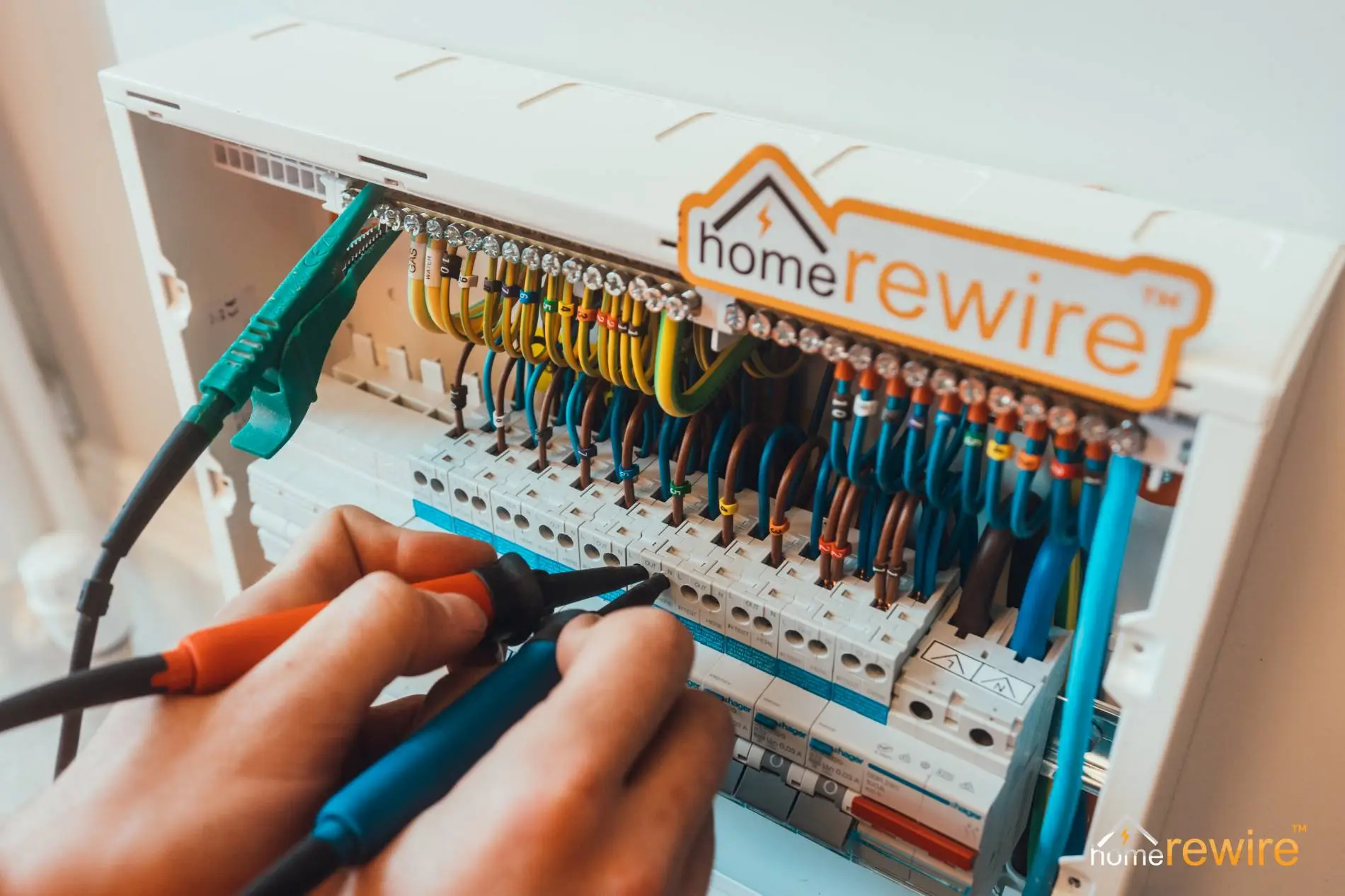
A dimmer switch that buzzes or hums is one of those things that starts as a minor irritation and slowly becomes impossible to ignore. The good news is it usually has a straightforward cause. The less good news is that some causes are more serious than others — and occasionally, what looks like a simple switch problem is actually a sign of something deeper going on with the wiring behind the wall.
Here’s what’s actually going on, and what you can do about it.
Is a Buzzing Dimmer Switch Dangerous?
Not always, but it’s never something to dismiss entirely. A faint hum that only appears when the lights are turned down low is often just a compatibility issue — annoying, but not an immediate safety risk.
A buzzing that gets louder over time, comes with flickering lights, feels warm to the touch, or carries any hint of a burning smell is a different matter entirely. Those are signs of a wiring fault or a failing switch, and you should turn the circuit off at the consumer unit and get an electrician in. In older properties especially, a buzzing switch can be the first visible symptom of wiring that’s been quietly degrading for years.
If you’re in Glasgow and you’re not sure which category yours falls into, HomeRewire™ can take a look and give you a straight answer.
Quick Reference: Causes and Fixes
| Cause | Likely Source | Fix |
| Incompatible bulbs | Bulb or switch | Replace with dimmable LEDs; check compatibility |
| Overloaded dimmer | Switch | Reduce bulb wattage or upgrade dimmer rating |
| Loose wiring | Behind the switch plate | Call an electrician — do not DIY |
| Old or failing switch | Switch | Replace with modern LED-compatible dimmer |
| Minimum load issue | Switch | Add an extra bulb or use a higher-wattage LED |
| Ageing wiring behind the circuit | Wider installation | EICR assessment; rewire if recommended |
What Causes a Dimmer Switch to Buzz?
There are four main culprits, and it’s almost always one of them.
Incompatible bulbs
This is the most common cause by a significant margin. Most older dimmer switches were designed for incandescent bulbs, which draw current in a smooth, predictable way. LED bulbs work completely differently — they use a driver to convert the power, and that driver doesn’t always play nicely with a dimmer that wasn’t built for it. The result is electromagnetic interference that you hear as a buzz or hum.
Not all LED bulbs are equal here either. Some dimmable LEDs work fine on one brand of dimmer and buzz on another. Manufacturers publish compatibility lists, but in practice most homeowners only find out there’s a mismatch when the noise starts.
The dimmer is overloaded
Every dimmer switch has a maximum wattage rating — usually between 400W and 1000W depending on the model. If the total wattage of the bulbs on that circuit is pushing close to or over that limit, the switch will struggle and often start buzzing. This is particularly common with ceiling roses that hold multiple bulbs, or where several downlights are wired to a single dimmer.
Loose wiring
A loose connection behind the switch plate causes tiny electrical arcs as the current tries to jump across the gap. That arcing creates vibration, which you hear as buzzing — and unlike the compatibility issues above, this one is a genuine safety concern. Loose wiring generates heat, and heat in an enclosed back box inside a wall is exactly the kind of thing that leads to fires.
In older properties with ageing cable insulation, loose connections are more common simply because the materials have had decades to shrink, harden, and pull away from terminals. If your home hasn’t been rewired in the last 25–30 years, a loose connection anywhere in the system is a real possibility.
The switch itself is old or poor quality
Dimmer switches don’t last forever. Older rotary dimmers are especially prone to buzzing as they age, partly because of how they regulate current and partly because the internal components wear out. If your dimmer is more than 15–20 years old and has started making noise, it’s quite possibly just done.
Where Is the Buzz Actually Coming From?
It helps to identify the source before deciding what to do.
- Buzz from the switch plate — points to the dimmer itself (overloaded, faulty, or incompatible)
- Buzz from the light fitting or bulb — usually the bulb vibrating due to the chopped current waveform the dimmer produces
- Buzz from both — typically a deeper compatibility or wiring issue worth investigating properly
A simple test: replace one of the bulbs with a known dimmable LED from a reputable brand and see if the noise changes. If it stops, the old bulbs were the problem. If it continues, the switch — or the wiring behind it — is more likely to be the issue.
How to Fix a Buzzing Dimmer Switch
Start simple and work up from there.
1. Swap the bulbs first
Replace existing bulbs with dimmable LEDs specifically rated for use with dimmer switches. Look for the word “dimmable” on the packaging — not all LEDs are, even if they look identical on the shelf. Check your dimmer manufacturer’s compatibility list if you can find it.
2. Reduce the load
If you have multiple bulbs on the circuit, try removing one or two and see if the buzzing reduces. If it does, the dimmer is being overloaded and needs either a lower total wattage or an upgraded dimmer with a higher rating.
3. Check the minimum load
Some dimmers — particularly LED-compatible ones — also have a minimum load requirement. Running them with just one or two very low-wattage LEDs can cause buzzing just as easily as running them at full capacity.
4. Replace the dimmer switch
If the bulbs are definitely compatible and the load is within rating, the switch itself is probably at fault. A modern LED-compatible dimmer from a reputable UK brand — Varilight, Lutron, and MK Electric are all well regarded — should solve it in most cases. Common electrical issues with light switches can often lead to inconvenience and frustration. It’s crucial to troubleshoot the specific symptoms to identify the problem accurately. Paying attention to buzzing sounds or flickering lights can provide valuable clues for resolving these issues.
If you’re not confident working inside a switch box, don’t. Turning off the circuit breaker is not the same as making the wiring safe to work on without the right knowledge. An electrician can replace a dimmer switch in under an hour — it’s not an expensive job, and it removes the risk entirely.
Old Wiring and Why It Matters More Than the Switch
Here’s something that often gets missed. The dimmer switch is the visible part of the problem, but in older homes it’s often just the messenger.
Properties built before the 1980s — and there are a lot of them across Glasgow, from tenement flats to post-war semis — were wired with materials and methods that have a finite lifespan. Rubber-insulated cables, aluminium wiring, early PVC installations, and old radial circuits without modern earthing arrangements are all common finds on rewires we carry out across the city. None of these were installed badly at the time — they were simply built to standards that have since moved on significantly. Understanding uk electrical wiring colour standards is crucial for ensuring safe and efficient electrical installations in older properties. Many homeowners are unaware of how outdated wiring systems can impact their safety and energy efficiency. Modern standards dictate different colour codes for wires, emphasizing the importance of updating existing systems to comply with current regulations.
The problem is that old wiring doesn’t fail all at once. It gives off signals — a buzzing switch here, a flickering light there, a socket that runs warm, an RCD that trips for no obvious reason. Each individual symptom looks minor. Taken together, they’re telling you the system is under stress.
Why old wiring is a genuine safety risk:
- Rubber insulation becomes brittle and cracks over time, leaving live conductors exposed inside the wall
- Older cables aren’t earthed to modern standards, which reduces protection in a fault condition
- Aluminium wiring expands and contracts with heat cycles, loosening connections gradually
- Older consumer units with wire fuses offer far less protection than modern MCBs and RCDs
- Circuits designed for 1960s or 70s appliance loads aren’t built for the demands of modern homes — EV chargers, heat pumps, multiple bathrooms, always-on smart devices
The age threshold most electricians work to is around 25–30 years. If your installation is older than that and hasn’t been assessed, an EICR (Electrical Installation Condition Report) is the sensible starting point. It gives you a clear picture of what’s there, what condition it’s in, and what — if anything — needs doing.
In some cases an EICR comes back with minor observations. In others, particularly with pre-1990 wiring, it flags enough issues that a full or partial rewire is the most cost-effective solution rather than fixing individual faults one at a time.
Buzzing Dimmer Switches in Older Glasgow Properties
Tenement flats and older Glasgow semis are particularly prone to dimmer switch problems, and there are a few reasons for that. Many were originally wired for incandescent lighting throughout, with dimmer switches installed later as a retrofit. When LED bulbs were then swapped in — often without changing the dimmers — the compatibility issues built up over time.
HomeRewire™ sees this regularly across Glasgow. In most cases the buzzing itself is a straightforward fix, but when we’re in an older property looking at the installation behind the switch, it’s not unusual to find wiring that deserves a closer look. Our team will always flag anything significant so you can make an informed decision — we won’t dress it up or push work that isn’t needed, but we won’t ignore it either.
If your home is one of the many older Glasgow properties that hasn’t had a full electrical assessment in the last couple of decades, it’s worth getting one done while an electrician is already on site. It costs very little in that context and gives you peace of mind either way. The cost to move a light switch can vary depending on the specifics of your home. An experienced electrician can provide a more accurate estimate based on the complexity of the job. Additionally, it’s always a good idea to consider other updates or repairs during their visit to maximize the benefit of their expertise.
FAQs
Why does my dimmer switch only buzz when turned down low?
Dimmers work by rapidly switching the power on and off to reduce brightness. At lower settings, this switching can cause more vibration in the bulb filament or LED driver. It’s usually a bulb compatibility issue — switching to a quality dimmable LED often sorts it. If it doesn’t, the switch itself may need replacing.
Can I use any LED bulb with a dimmer switch?
No. Standard LED bulbs are not designed for use with dimmers and will often buzz, flicker, or fail early. You need bulbs specifically labelled as dimmable, and ideally ones listed as compatible with your particular dimmer brand.
Why is my brand new dimmer switch still buzzing?
Usually because the bulbs weren’t changed at the same time. A new dimmer fitted to existing non-dimmable LEDs will buzz just as much as the old one. Replace the bulbs alongside the switch.
Could the buzzing be a sign my wiring needs replacing?
Yes, it can be. In older homes especially, a buzzing switch is sometimes the first sign that connections are loosening, insulation is failing, or the circuit is under more stress than it was designed for. If the switch is old and the property hasn’t been rewired in 25+ years, an EICR is worth arranging.
Is it safe to leave a buzzing dimmer switch?
A very faint hum with no other symptoms is usually low risk in the short term, but it should still be investigated. If there’s any warmth, burning smell, or flickering involved, turn the circuit off and get it checked. Don’t leave a suspected wiring issue unattended.
How much does it cost to replace a dimmer switch in Glasgow?
A straightforward replacement is typically completed within an hour. If further investigation is needed or an EICR is carried out at the same time, HomeRewire™ can give you a clear quote before any work begins — no surprises.
Got a buzzing dimmer switch in your Glasgow home, or think your wiring might be overdue for a check? HomeRewire™ is Scotland’s leading electrical rewire specialist, with over 6,000 homes rewired across Glasgow and Scotland. Our large experienced team works fast — most full house rewires completed in days, not weeks — with short lead times, NICEIC registration, and over 300 five-star reviews.