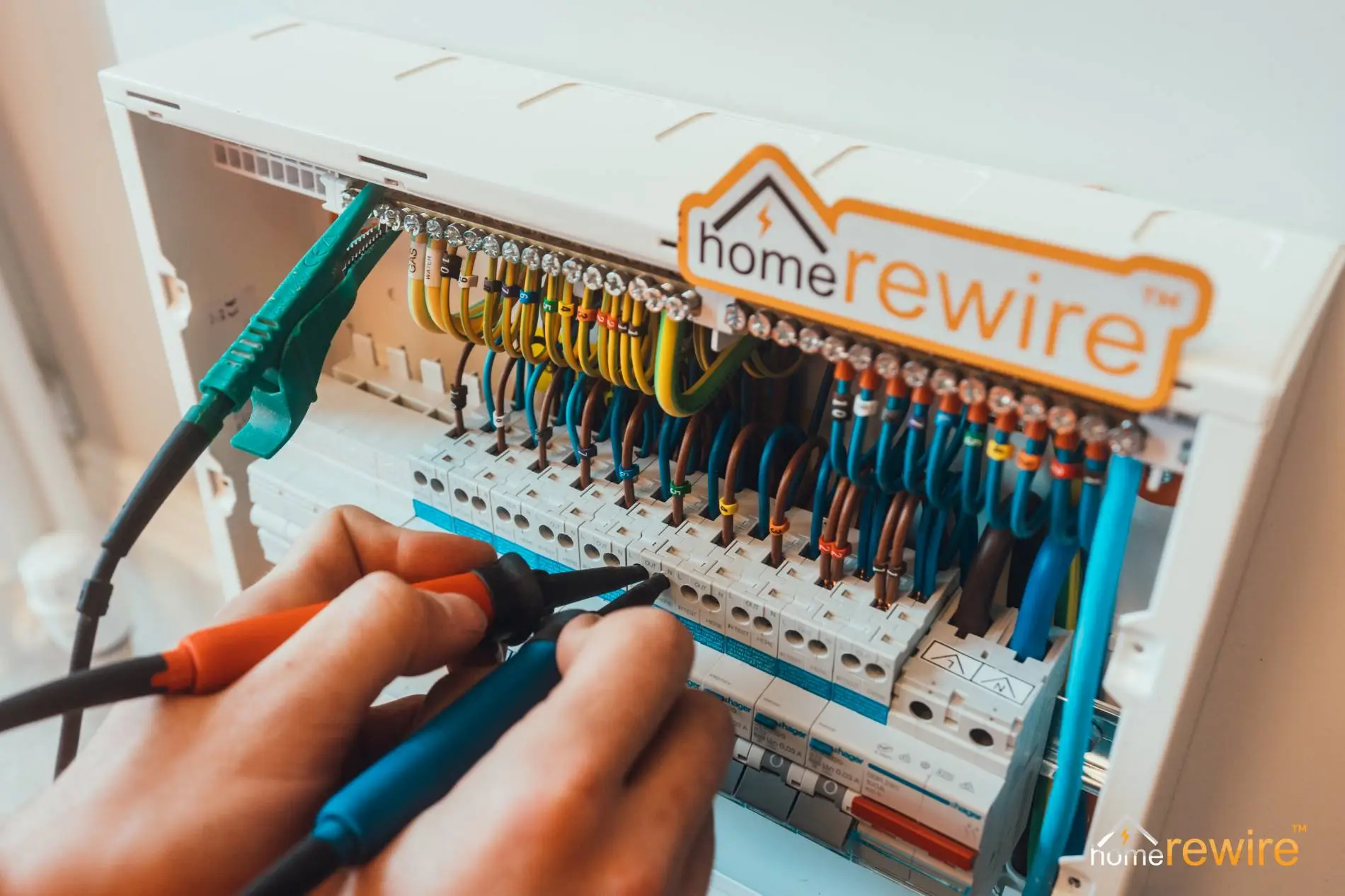
A burning smell from a plug socket is one of those things you shouldn’t talk yourself out of. It’s not always dramatic. No sparks, no smoke, no blown fuse. Just a faint smell you notice once, maybe twice, and then start second-guessing. Don’t. Your nose is picking up something your eyes can’t see yet.
Electrical faults are responsible for around 20,000 house fires in the UK every year. Many of them start silently, inside walls, behind sockets, in wiring that’s simply worn out. This guide breaks down exactly what’s causing that smell, what the risk levels are, and when it stops being a socket problem and starts being a wiring problem.
What Causes a Burning Smell From a Plug Socket?
There’s rarely one single cause. More often it’s a combination of age, load, and the condition of the wiring behind the socket. Here are the most common culprits:
Overloaded Circuit
Plugging too many high-draw appliances into one circuit forces more current through the wiring than it’s rated for. The cable heats up. The insulation begins to degrade. You get that faint burning or plastic smell. It’s not always the socket itself, it’s everything behind it.
Loose Wiring Connections
This is one of the most common causes and one of the most dangerous. A loose terminal inside the socket creates resistance at the connection point. Resistance generates heat. That heat builds up in a confined space, scorches the surrounding plastic, and in the worst cases ignites it. The smell is usually sharp and acrid, not the soft smell of something warming up.
Faulty or Worn-Out Socket
Sockets don’t last forever. Internal components wear down, contacts oxidise, and the whole unit becomes less reliable over time. An old socket running modern appliances is working harder than it was ever designed to. If the socket feels warm to the touch or the smell comes back after you’ve unplugged everything, the socket itself is likely the problem.
Deteriorating or Outdated Wiring
Glasgow has a huge amount of Victorian and Edwardian housing stock, alongside post-war tenements and council-built semis from the 1950s and 60s. A significant portion of these properties are still running on wiring that hasn’t been touched in decades.
Rubber-insulated wiring from that era becomes brittle and cracks over time. PVC degrades too, especially in warm roof voids or behind radiators. When insulation fails, you get arcing. Arcing produces heat. Heat produces that smell.
| Wiring Type | Era | Risk Level |
| Lead-sheathed | Pre-1950s | Very High |
| Rubber insulated | 1950s to 1970s | High |
| Early PVC | 1970s to 1980s | Moderate to High |
| Modern PVC (to BS 7671) | 1990s to present | Low (if maintained) |
Worried your home’s wiring might be behind the smell? HomeRewire is Glasgow’s number one house rewiring contractor, with over 6,000 rewires completed across Scotland. Most full house rewires are finished in just 1 to 2 days. Request your free home rewire quote today.
Rodent Damage
It happens more than people think, especially in older Glasgow tenements, detached properties with roof space, or homes near green belt areas on the city’s outskirts. Rodents chew through cable insulation, leaving live conductors exposed. If your home has had a rodent problem at any point, that’s a risk worth taking seriously.
Incorrectly Rated Fuse or Breaker
If a circuit breaker or fuse is rated too high for the cable it’s protecting, it won’t trip when it should. The cable overheats while the breaker sits there doing nothing. This is a wiring installation fault, not something you can fix by swapping the socket.
Is a Burning Smell From a Plug Socket Dangerous?
Yes, potentially. The smell itself is a symptom, and what it’s pointing to determines the level of risk. A one-off smell after overloading a circuit is different from a recurring smell with no obvious cause. The latter means something is wrong with the wiring or the socket, and heat is building up somewhere you can’t see.
Signs you need to act immediately:
- The socket is discoloured, scorched, or has visible burn marks
- The smell is strong, chemical, or plastic-like
- The socket feels warm or hot when nothing high-draw is plugged in
- You hear a faint crackling or buzzing sound near the socket
- Circuit breakers are tripping more than usual
None of these are things to monitor and revisit next week.
What Should You Do If You Smell Burning From a Socket?
1: Stop Using It Immediately
Unplug everything from that socket. Don’t use it again until it’s been inspected. If the smell is strong or you see any discolouration, turn off the circuit at the consumer unit.
2: Don’t Assume It’s Just the Appliance
It’s tempting to blame the phone charger or the extension lead. Sometimes that’s right. But if the smell persists after you’ve unplugged everything, the problem is in the socket or the wiring behind it.
3: Call a Qualified Electrician
Not a handyman, not a friend who’s “good with electrics.” An electrician registered with NICEIC, NAPIT, or ELECSA who can inspect the socket, test the circuit, and give you an honest assessment. Glasgow has no shortage of electricians, but for anything that points toward a rewire, you want a specialist, not a generalist.
4: Ask About the Age of Your Wiring
This is the question most homeowners don’t think to ask. Glasgow’s older housing areas, Shawlands, Pollokshields, the West End, Dennistoun, are full of properties where the wiring simply hasn’t kept pace with modern electrical demand. A full electrical installation condition report (EICR) will tell you the state of the whole system, not just the socket you’re worried about.
How Do You Know If the Problem Is the Socket or the Wiring?
This is where most homeowners get stuck. A single loose connection in a socket is a straightforward fix. But if the wiring behind it is old, undersized, or degraded, replacing the socket alone doesn’t solve anything.
Indicators that the wiring is the real issue:
- Multiple sockets in different rooms smelling or running warm
- Lights flickering elsewhere in the house when appliances are in use
- An old consumer unit with rewirable fuses rather than modern breakers
- Your Glasgow home hasn’t been rewired since before 1990
- An EICR returning a C1 or C2 code (meaning danger or potential danger present)
| EICR Code | Meaning | Action Required |
| C1 | Danger present | Immediate action |
| C2 | Potential danger | Urgent remedial work |
| C3 | Improvement recommended | Advisory only |
| FI | Further investigation needed | Investigate before use |
If you’re getting C1 or C2 codes, a patch job won’t be enough.
Can a Burning Smell From a Socket Cause a House Fire?
It can, yes. Electrical fires in homes often start without warning, inside walls or ceiling voids where the heat has nowhere to escape. By the time the fire reaches somewhere visible, it’s already well established. That’s what makes electrical faults more dangerous than most other fire risks in the home.
If you smell burning from a socket, you’re smelling heat that is already happening somewhere in or near your wiring. That’s the warning sign. Catching it now, before anything ignites, is exactly the point.
Is a Burning Smell From a Plug Socket an Emergency?
If the smell is strong, sudden, or accompanied by visible scorching, treat it as an emergency. Turn off the circuit, don’t use the socket, and call an electrician the same day. If you can smell burning but can’t locate the source, switch off the mains at the consumer unit and call immediately.
For a faint, occasional smell with no other symptoms, it’s still urgent but not necessarily a 999 situation. Get it looked at within 24 to 48 hours. Glasgow electricians are busy, but any reputable one should be able to prioritise a potential electrical fault.
Get a Free Rewire Quote From Scotland’s Rewiring Specialist
HomeRewire is Glasgow’s number one house rewiring contractor and Scotland’s busiest rewiring specialist. Over 6,000 rewires completed. Most jobs finished in 1 to 2 days. Every installation certified to BS 7671.
If a burning smell from a plug socket has you wondering about the state of your wiring, the honest answer starts with a survey.
Request your free rewire quote from HomeRewire today.
Frequently Asked Questions
Why does my plug socket smell like burning but there are no visible marks?
The damage is likely happening inside the socket or in the cable behind the wall. Arcing and overheating can cause significant damage to insulation and connections without any external signs. Don’t wait for visible marks before calling an electrician.
Can a burning smell from a socket go away on its own?
The smell might fade, but the underlying fault won’t fix itself. If anything, the heat cycling continues to degrade the wiring or connection over time, making it progressively more dangerous.
Is it safe to use other sockets in the house if one smells of burning?
If the affected socket is on a shared circuit, be cautious with everything else on that circuit. If you’re unsure which sockets share a circuit, limit use across the property until an electrician has inspected it.
Should I turn off the electricity at the mains if I smell burning from a socket?
If the smell is strong or you can’t identify the source, yes. Isolating the circuit at the consumer unit, or the whole board if needed, removes the risk until the fault is found.
Can Glasgow landlords be held liable if a tenant’s home has faulty wiring that causes a fire?
Yes. Landlords in Scotland are legally required to ensure electrical installations are safe and to provide a valid EICR. Failure to do so can result in serious legal and financial consequences, including liability for fire damage. The rules apply whether the property is a modern flat or a Victorian tenement.
How long does an EICR take in Glasgow, and how much does it cost?
An EICR on an average-sized Glasgow property typically takes 2 to 4 hours. Costs vary between £150 and £300 depending on property size and the electrician. It’s a legal requirement for rental properties in Scotland and strongly recommended for any owner-occupied home over 25 years old.
What is the difference between a burning smell and a fishy smell from a socket?
A fishy or urine-like smell from an electrical fitting usually indicates overheating plastic components, often in the socket backing or a connected device. It’s just as serious as a burning smell and should be treated the same way.