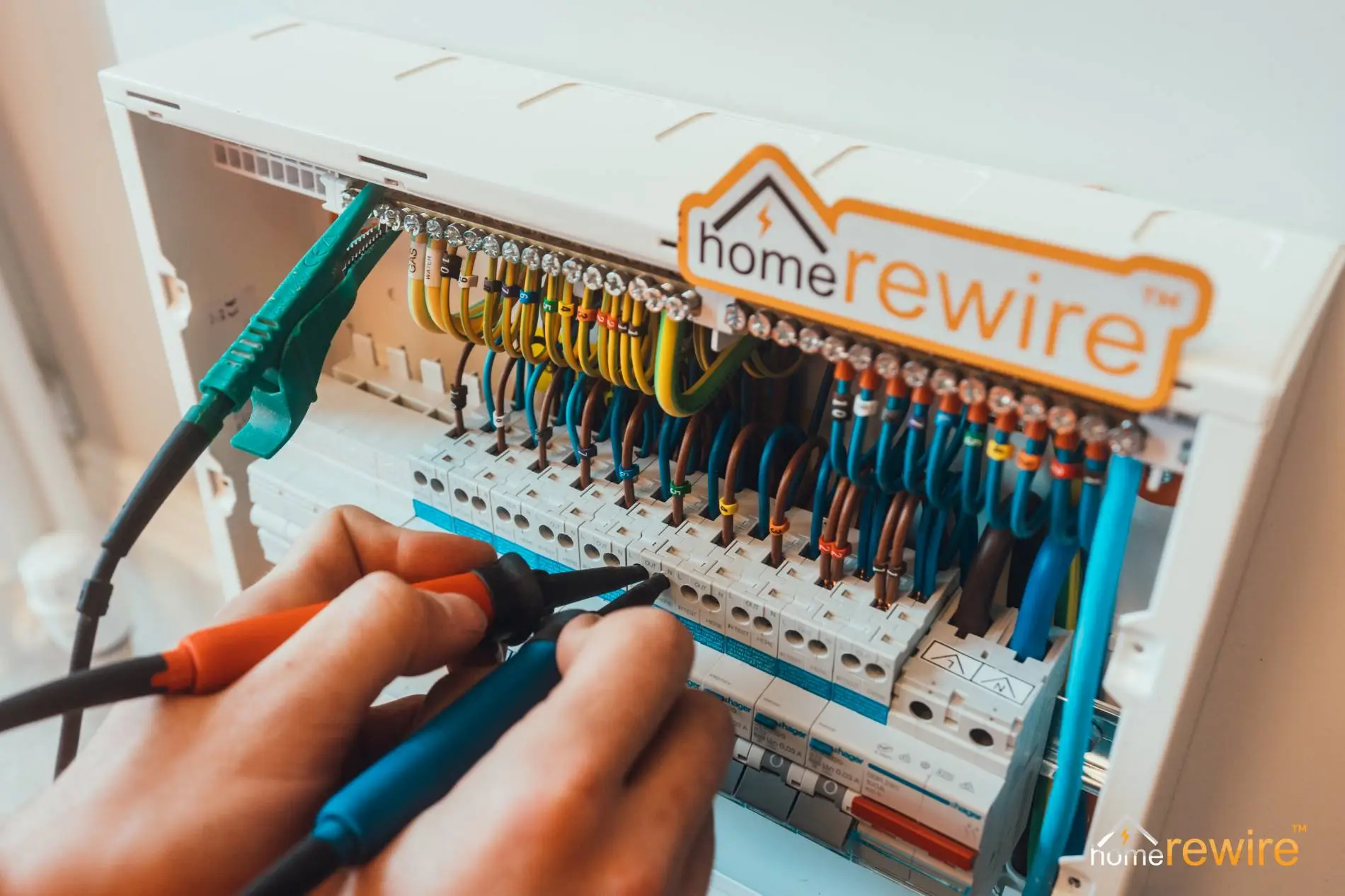
The average electrician charges between £45 and £65 per hour for standard domestic work in the UK in 2026. Most people won’t actually be quoted an hourly rate though — electricians tend to price by the job or by the day. Knowing the hourly figure still matters, because it’s how you check whether what you’re being quoted makes any sense.
In Glasgow and across Scotland, rates typically sit between £42 and £58 per hour. Solid tradespeople, proper certification, just without the London price tag attached.
UK Electrician Hourly Rates 2026: The Core Numbers
| Rate Type | UK Average |
| Standard domestic hourly rate | £45–£65 |
| Half-day rate (up to 4 hours) | £160–£260 |
| Full day rate | £300–£450 |
| Emergency / out-of-hours | £75–£120 |
| Minimum call-out charge | £65–£120 |
These are what a qualified, registered domestic electrician typically charges. Commercial work — offices, retail units, industrial premises — usually runs higher.
Electrician Hourly Rates by UK Region in 2026
The gap between regions is bigger than most people expect. London rates can be double what you’d pay in Scotland or Northern England — not because the standard of work is higher, but because the cost of running a business in London is considerably greater.
| Region | Hourly Rate | Full Day Rate |
| Central London | £68–£95 | £460–£660 |
| Inner and Outer London | £52–£78 | £360–£540 |
| South East (Surrey, Kent, Sussex) | £48–£72 | £330–£510 |
| South West (Bristol, Bath) | £44–£62 | £310–£440 |
| East of England | £42–£60 | £295–£420 |
| Midlands | £38–£58 | £275–£415 |
| North West (Manchester, Liverpool) | £40–£57 | £290–£415 |
| Yorkshire and Humber | £36–£52 | £255–£375 |
| North East | £34–£50 | £255–£355 |
| Glasgow | £42–£58 | £295–£415 |
| Edinburgh | £45–£63 | £315–£445 |
| Aberdeen | £44–£61 | £310–£435 |
| Dundee, Perth, Inverness | £37–£52 | £270–£375 |
| Scottish Highlands and Islands | £40–£62 | £295–£435 |
| Wales | £34–£52 | £255–£375 |
| Northern Ireland | £30–£48 | £235–£348 |
Why Most Electricians Don’t Quote by the Hour
If you call an electrician and ask their hourly rate, most won’t give you a straight answer — and that’s not evasiveness. It’s because the hourly rate on its own tells you very little about what a job will actually cost.
Most electricians price one of three ways:
Fixed price — a single agreed price for a defined job, regardless of how long it takes. This is the most straightforward for homeowners and what HomeRewire provides as standard. You know the number before anyone arrives.
Day rate — used for bigger jobs where the scope isn’t fully predictable before walls come open. A full rewire, consumer unit replacement, or complex fault-finding job might be priced this way. The day rate is agreed upfront and doesn’t change regardless of whether the job runs to 6 hours or 9.
Time and materials — an hourly rate plus the actual cost of parts used. Less common for domestic work but occasionally used for diagnostic jobs where the problem isn’t known until the investigation is complete. This is the context where knowing the hourly rate matters most — because the clock is running while they figure out what’s wrong.
If you’re offered time and materials without any estimate of hours, ask for a rough ceiling figure before agreeing. An open-ended time and materials job can be an unwelcome surprise.
What an Electrician’s Hourly Rate Actually Has to Cover
A rate of £55 per hour sounds healthy. What it actually has to absorb is less obvious — and it explains why electricians who quote significantly less than the going rate often aren’t the bargain they appear to be. electrical safety costs can add substantially to the overall expense of hiring an electrician. Ensuring that all work meets safety standards is crucial, and these costs can be a hidden factor in budget estimates. Homeowners should be aware that compliant installations not only protect their property but also provide peace of mind.
A self-employed electrician on £55 per hour isn’t taking home £55 per hour. From that charge rate they’re covering:
- Van costs — finance, insurance, fuel, maintenance, and annual MOT
- Tools and test equipment — a calibrated multifunction tester alone costs upwards of £500, needs regular recalibration, and eventually needs replacing
- Public liability insurance — required and not cheap
- Certification scheme membership — SELECT in Scotland, NICEIC or NAPIT in England and Wales — these carry meaningful annual fees and require passing regular competency assessments
- Time that can’t be charged — travelling to jobs, quoting, sourcing materials, admin
- Tax — income tax, Class 4 National Insurance, and VAT for those above the registration threshold
Once everything is accounted for, the actual take-home from a £55 charge rate is typically around £28–£36 per hour. Someone quoting £25 per hour for domestic electrical work in 2026 is either not registered, not insured, or not making it work as a sustainable business. None of those situations end well for the customer. Cost considerations for fuse box replacement can vary significantly based on the complexity of the job. Higher quality materials and experienced electricians may raise the upfront costs but ensure safer and more reliable installations. It is crucial for homeowners to weigh these factors when planning their electrical upgrades. Understanding circuit breaker replacement costs breakdown can help homeowners make informed decisions about their electrical projects. It is advisable to obtain multiple quotes and consider the reputation of the electricians involved in the process. Moreover, keeping track of potential maintenance expenses can provide better insights into the long-term financial implications.
Emergency Electrician Rates in 2026
Emergency call-outs attract a premium — evening, weekend, and bank holiday attendance costs more than standard hours. That’s not a surprise charge; it’s a fair reflection of what it costs to respond to a fault outside normal working patterns.
| Situation | Typical Rate |
| Emergency within standard hours | £70–£115 per hour |
| Evening call-out (after 6pm) | £90–£145 per hour |
| Weekend call-out | £90–£150 per hour |
| Bank holiday attendance | £95–£155 per hour |
| Minimum emergency charge | £85–£200 |
In Glasgow and Scotland, emergency rates typically run £68–£110 per hour — proportionally similar to the rest of the UK but without London’s premium.
One practical point worth knowing: if your problem isn’t an immediate safety risk — a tripped breaker that stays reset, a single non-functioning socket — waiting for standard hours on Monday morning can cost half what a Friday evening call-out would. If there’s any doubt about whether something is genuinely urgent, call an electrician and describe the fault. Most will tell you honestly whether it needs immediate attention.
Electrician Rates in Glasgow and Scotland: What’s Worth Knowing
SELECT is the registration scheme that matters in Scotland
SELECT-registered electricians can self-certify their work under the Building (Scotland) Regulations — the Scottish equivalent of Part P in England and Wales. This is what generates the certificates you’ll need for property sales, remortgages, and EICR compliance. Always confirm a contractor is SELECT-registered before booking any electrical work in Scotland.
Glasgow rates are competitive without being cheap
The Central Belt has a strong market — plenty of qualified contractors, significant ongoing demand from the region’s older housing stock, and healthy competition that keeps prices fair. What Glasgow doesn’t have is the artificial price floor of a market with too few tradespeople and too much work, which is what drives some regional premiums.
Edinburgh runs slightly above Glasgow
— typically £3–£6 per hour higher on equivalent work. Higher property values, higher operating costs, and a slightly tighter market of available contractors all contribute. Aberdeen has historically carried a similar premium, a hangover from oil industry wage benchmarks in the region, though that gap has narrowed since 2016.
Rural Scotland and the Highlands
Thia can surprise people. Limited local competition and genuine travel distances mean rates toward the higher end of the Scottish range are common, and in some areas there are fewer alternatives available than you’d have in a city. Factor travel time into any quote for a rural location — some contractors charge it, some don’t, and it’s worth clarifying upfront.
What Common Electrical Jobs Cost in Glasgow and Scotland in 2026
Most people want a job cost, not a rate per hour. Here’s what typical domestic electrical work runs to in Glasgow and central Scotland currently.
| Job | Glasgow / Scotland Typical Cost |
| Replace a light fitting | £50–£95 |
| Install a new socket | £80–£145 |
| Move a light switch | £110–£295 |
| Consumer unit replacement | £500–£900 |
| Full house rewire — 3-bed | £2,800–£4,800 |
| EICR electrical safety inspection | £130–£280 |
| EV charger installation | £750–£1,400 |
| Fault finding | £90–£230 |
| Outdoor lighting installation | £185–£460 |
| Smart switch installation | £160–£295+ |
What Affects the Rate You’re Quoted
Qualifications and Experience
A contractor who’s been rewiring Glasgow tenements for fifteen years brings something genuinely different to the job than a newly qualified electrician on their third month. Experience in older Scottish housing stock — solid stone walls, lath-and-plaster, non-standard historical wiring configurations — is a real skill that takes time to develop and is reflected in rates.
VAT Registration
Contractors turning over more than £90,000 per year are legally required to be VAT registered, adding 20% to your bill. Many competent sole traders operate below this threshold and don’t charge VAT. Neither situation is better or worse — but always confirm whether a quote includes or excludes VAT before comparing it against others. A £400 ex-VAT quote and a £480 inc-VAT quote are the same number.
Property Type and Condition
A clean modern house with accessible wiring and standard wall construction is a different working environment to a pre-1930s Glasgow tenement with solid sandstone walls, original wiring, and a lath-and-plaster internal finish. Electricians who regularly work across older Central Belt housing stock understand what’s involved. Those who don’t may quote low and revise upward once they see what they’re actually dealing with — which is a frustrating and avoidable situation.
The Part No Price Guide Covers
An hourly rate is a number. What you actually get for it is something else entirely.
A genuinely good electrician shows up when they say they will. They tell you what they find honestly, even when the honest answer means more work than either of you hoped for. They issue proper certificates without being chased. They leave the property clean. They answer the phone if something needs revisiting.
None of those things appear in a cost-per-hour figure, but all of them affect the outcome of the job. The reviews, the repeat bookings, the word-of-mouth referrals — that’s where the real quality signal lives.
At HomeRewire, we’re Scotland’s number one rated electrical contractor. We’ve completed over 6,000 full house rewires across the country, and most are done in 1–2 days. If you want a fixed price for any electrical work in Glasgow or central Scotland, get in touch and we’ll give you a straight answer. You can trust us to provide the top rated electricians in Glasgow for all your electrical needs. Our team is dedicated to delivering high-quality workmanship and exceptional customer service. Whether you need a small repair or a major installation, we are here to help. When considering cost estimates for rewiring a house, it’s essential to get detailed quotes from multiple contractors. Factors such as the size of the home and the complexity of the wiring will influence the final price. Our experienced team can help you understand these variables and offer competitive pricing tailored to your needs.
Frequently Asked Questions
How Much Does an Electrician Charge Per Hour in the UK in 2026?
Between £45 and £65 per hour for standard domestic work across most of the UK. London runs £68–£95. Glasgow and Scotland typically £42–£58.
Why Won’t Some Electricians Give Me a Straight Hourly Rate?
Because most jobs aren’t priced that way. A fixed price or day rate gives both sides more clarity than an open-ended hourly arrangement. Ask for a fixed price wherever the scope of work is clearly defined.
How Much Extra Is an Emergency Call-Out?
Roughly 40–80% above standard rates for out-of-hours work. In Glasgow that typically means £68–£110 per hour in the evening or at weekends versus the standard £42–£58.
Should I Just Go With the Cheapest Quote?
Not based on rate alone. An electrician quoting well below regional averages is often unregistered, underinsured, or hasn’t properly understood the job. All three create problems — during the work, or later when paperwork is missing at the point of a sale.
Does the Electrician Need to Be VAT Registered?
Only if their turnover exceeds £90,000. Many competent sole traders aren’t VAT registered and don’t charge it. Always confirm whether a quote is inclusive or exclusive of VAT before comparing prices.
Are Electricians in Scotland More Expensive Than England?
No — Glasgow and central Scotland rates are broadly in line with Northern England. Edinburgh and Aberdeen run slightly higher. All of Scotland is significantly more competitive than London and the South East.
Does HomeRewire Charge by the Hour?
No — we price all work on a fixed basis wherever the scope allows. You know the number before we arrive, and it doesn’t change. Get in touch for a quote across Glasgow and central Scotland.