
Moving a light switch in the UK costs between £90 and £350 in 2026. Most standard domestic relocations land in the £120–£180 range. The final price depends on wall type, how far the switch moves, the type of switch, and whether the existing wiring needs attention.
In Glasgow and across Scotland, prices broadly match the North of England — generally 10–15% below London rates without any drop in quality from a good contractor.
Light Switch Relocation Costs: Full UK Price Table 2026
| Job Type | Typical UK Cost | Scotland / Glasgow |
| Simple relocation — same wall, accessible wiring | £90–£145 | £85–£135 |
| Standard relocation — plasterboard chase required | £120–£190 | £110–£175 |
| Moving through solid masonry wall | £175–£275 | £160–£255 |
| Moving a two-way light switch position | £195–£320 | £180–£295 |
| Moving an intermediate switch (3+ locations) | £220–£350 | £200–£325 |
| Moving a dimmer switch | £135–£235 | £125–£215 |
| Moving a smart light switch (neutral wiring required) | £175–£320+ | £160–£295+ |
| Making good and plastering after chasing | £55–£160 extra | £50–£145 extra |
| Multiple switch relocations in one visit (per switch) | £75–£130 each | £70–£120 each |
Prices include labour and basic materials. Switch unit costs are separate — see below. Prices exclude VAT where applicable.
Light Switch Unit Costs: How Much Does the Switch Itself Cost?
The switch unit is charged on top of the labour price. The type you choose can shift material costs considerably.
| Switch Type | Unit Cost |
| Standard plastic rocker switch | £1–£12 |
| Chrome or brushed steel rocker switch | £5–£25 |
| Toggle switch — period or retro style | £9–£35 |
| Push-button light switch | £15–£45 |
| Bakelite switch — heritage properties | £40–£60 |
| Standard dimmer switch | £8–£45 |
| Period dimmer switch — brass or decorative | £60–£155 |
| Touch switch | £20–£55 |
| Smart light switch — Wi-Fi, Zigbee, or Z-Wave | £25–£85 |
| Glass switch plate | £15–£60 |
| Architrave switch — narrow door frame format | £2–£12 |
What Affects the Cost of Moving a Light Switch?
Wall Type — The Biggest Price Factor
Plasterboard stud walls allow cables to be fished through the cavity quickly. Solid masonry walls — common throughout Glasgow tenements, sandstone terraces, and pre-war housing across central Scotland — require chasing: a channel cut into the plaster and stonework to route the new cable. That takes longer, generates significant dust, and leaves a channel needing filling and skimming before decorating.
Cable Routing Distance — How Far Is It Moving?
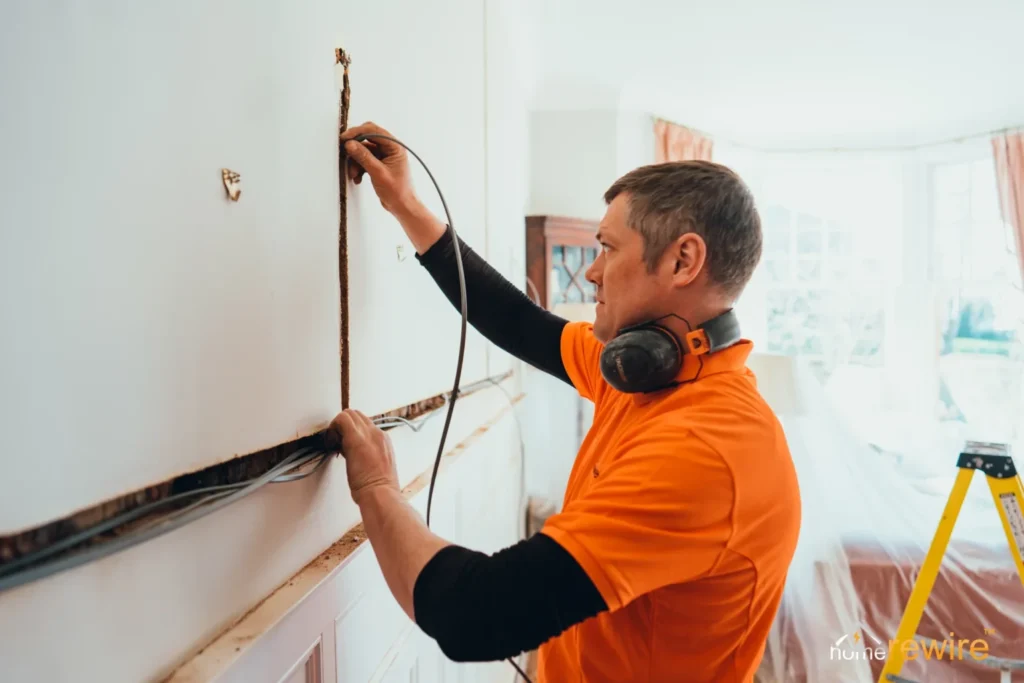
Moving a switch six inches along the same wall is a very different job to moving it across a doorway or onto an entirely different wall. More distance means more cable, more chasing, and more time on site.
Existing Wiring Condition — Hidden Costs in Older Properties
In older properties, opening a wall to move a switch can reveal wiring that needs attention — rubber-insulated cable, inadequate earthing, or non-compliant junction box arrangements. A good electrician flags this and quotes accordingly. One who doesn’t is leaving the problem in the wall. Dimmer switch buzzing causes concerns about electrical safety and functionality. Addressing these issues early can prevent more significant problems down the line. It’s essential to consult with a qualified electrician to ensure that any outdated wiring or faulty components are properly managed.
Switch Type — How It Affects Labour Cost
- Single-pole switch — straightforward relocation, lowest labour cost
- Two-way switch — additional strapper conductors between positions add time
- Intermediate switch — requires testing to identify the correct switch and accurately reconnect the crossover configuration
- Smart light switch — most require a neutral conductor at the switch position; many older UK installations don’t have one, and running one in adds to both time and cost
Electrician Call-Out Rates — Minimum Visit Costs UK 2026
Most electricians won’t attend site for less than a half-day rate. In 2026 that’s typically £160–£240 outside London and £220–£360 in London. Combining a switch relocation with other electrical work in the same visit is considerably more cost-effective than a standalone booking.
What Other Light Switch Cost Guides Don’t Tell You
Switch Position and Height — A Permanent Decision
Where the new switch ends up affects how it works every single day. Part M of the Building Regulations recommends switch heights between 450mm and 1200mm from floor level for accessibility. Within that range, a switch at natural hand-drop height feels right; one positioned pragmatically during a difficult cable run doesn’t. Have this conversation before any chasing starts — changing it afterwards means opening the wall again.
Abandoned Cable Compliance — What Happens to the Old Wiring
When a switch moves, the cable at the old position needs a decision. If it’s being abandoned rather than removed, it must be properly terminated at both ends and labelled — not left loosely coiled behind a blanking plate. That’s a non-compliant finish under BS 7671 and causes problems for every electrician who works on the property afterwards.
Switch Height Consistency Across Multi-Switch Rooms
In kitchens and hallways with multiple switch positions, consistent heights look deliberate. Heights that vary because each switch was moved at a different time look careless. If you’re moving one switch in a room that has others, consider whether the rest should be adjusted at the same time.
Making-Good and Plastering Costs — Why Finish Quality Matters
A chase filled slightly proud of the surrounding plaster will show through paint regardless of how many coats go on. A proper skim finish left to dry fully before sanding makes the difference between a wall that looks worked on and one that doesn’t. At HomeRewire, plastering is an optional add-on precisely because coordinating a separate plasterer after the electrical work is done is an unnecessary hassle.
Cost to Move a Light Switch in a Glasgow Tenement or Older Scottish Property
This is genuinely different work to moving a switch in a modern new-build — and the price reflects that.
Sandstone tenements across Glasgow have solid stone or brick walls, often with lath-and-plaster internal finishes in pre-1960s examples. Chasing into sandstone takes longer, requires heavier equipment, and generates considerably more dust than cutting plasterboard. Lath-and-plaster walls need care to avoid cracking or dislodging plaster beyond the immediate cable run.
The wiring in these properties also presents more variables — rubber-insulated cables, non-standard junction box configurations, and inadequate earth conductors are all things we encounter regularly working across older Glasgow properties. None of this makes a switch relocation impossible, but it does mean a phone quote without seeing the property and the wall construction isn’t worth much. Get someone out to assess it properly first. Understanding uk electrical wiring colour codes is essential for ensuring that installations comply with safety standards. Incorrect wiring can lead to serious hazards, so familiarizing yourself with these codes can make a significant difference. Proper adherence to these guidelines helps prevent electrical faults and costly repairs down the line.
Certification Cost: Do I Need a Certificate When Moving a Light Switch?
Yes — and it should be included in the price. A Minor Electrical Installation Works Certificate (MEIWC) must be issued when a switch is relocated. It confirms the work was tested and completed to BS 7671 — the current UK Wiring Regulations — and you’ll need it if the work is ever queried during an EICR inspection or property sale.
In England and Wales, moving a switch on an existing circuit is considered minor electrical work under Part P and doesn’t require local authority notification. In Scotland, the Building (Scotland) Regulations require all electrical installation work to be carried out by a competent person.
If an electrician moves your switch and doesn’t offer a certificate, ask for one. If they can’t provide one, that tells you something important about their registration status.
What the Job Involves: Step-by-Step Light Switch Relocation
- Isolate the lighting circuit at the consumer unit and confirm dead using a calibrated voltage indicator
- Remove the existing switch and inspect cable condition, back box, and terminal connections
- Plan the new cable route and mark out the wall for chasing if required
- Install new back box at the new position and run cable from the circuit feed or existing switch position
- Make off all connections at both old and new positions using appropriate terminals
- Seal the old position with a blanking plate or make good the plasterwork
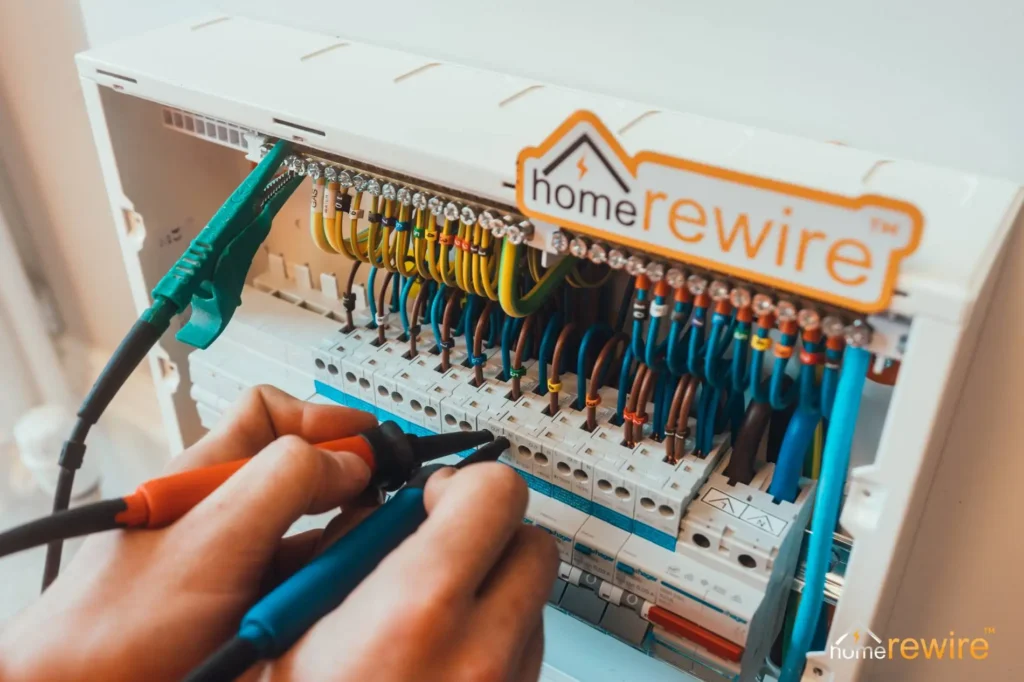
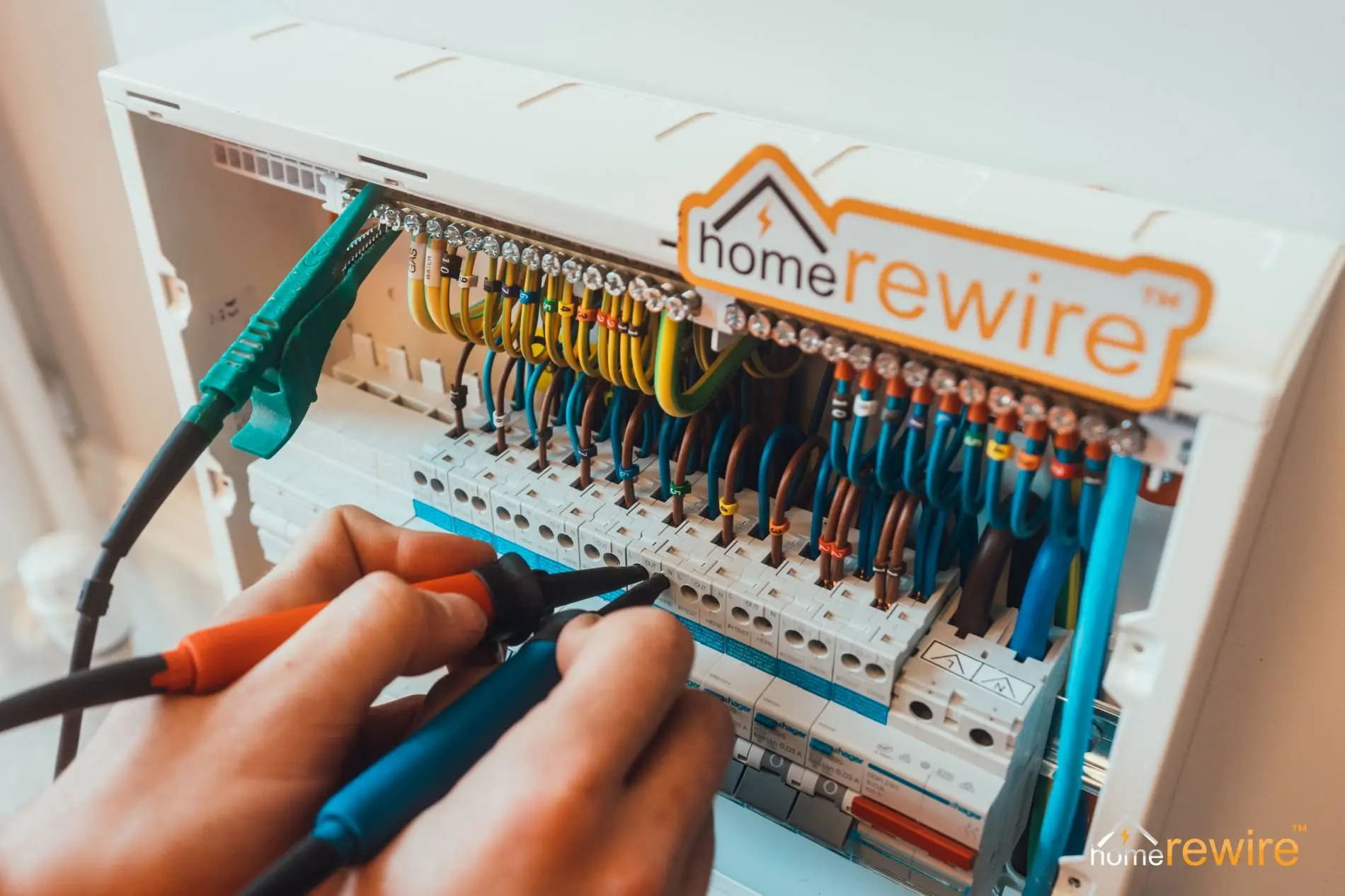
- Test for continuity, insulation resistance, earth loop impedance, and correct polarity
- Issue a Minor Electrical Installation Works Certificate on completion
When Moving a Light Switch Reveals a Bigger Electrical Problem
Most switch relocations in modern properties are exactly what they appear — a predictable job with a predictable cost. In older properties the picture can be different.
Opening a wall in a pre-1970s property sometimes reveals wiring that raises questions beyond the immediate task. Brittle rubber-insulated cable, improperly terminated connections, inadequate earthing, or evidence of previous amateur work can all turn a simple relocation into a wider conversation about the installation’s overall condition. The absence of an earth wire can create significant safety hazards and increase the risk of electric shock. Understanding the risks of no earth wire installation is essential for ensuring compliance with modern electrical standards. Homeowners should consider having their electrical systems inspected by a qualified electrician to identify and address potential issues.
At HomeRewire — Scotland’s number one rated electrical contractor — we give homeowners a straight assessment of what’s there and what the options are. We’ve completed over 6,000 full house rewires across Scotland. If a full rewire turns out to be the right answer, most of our rewires are completed in just 1–2 days — far less disruption than people expect, and far faster than the 4–10 days most electricians quote.
Frequently Asked Questions About Moving a Light Switch
Do I Need Planning Permission to Move a Light Switch?
No. Planning permission isn’t required. In England and Wales it falls under Part P as minor electrical work. In Scotland it must be carried out by a competent person. A MEIWC should be issued regardless of location.
How Long Does It Take to Move a Light Switch?
A standard relocation on a plasterboard wall takes one to two hours including testing and making good. A solid masonry wall with chasing — particularly in older Glasgow or Scottish properties — can take a half day or more depending on cable run length and wall construction.
How Much Will It Cost to Fix the Wall After Moving a Light Switch?
Expect to add £55–£160 on top of the electrical cost for filling, skimming, and making good the chased wall and old switch position. HomeRewire offers plastering as an optional add-on so you don’t need to coordinate a separate trade.
Is It Cheaper to Move Several Light Switches at Once?
Yes — significantly. The minimum electrician call-out is fixed regardless of how many switches are moved in a visit. Moving three or four switches in one appointment costs far less per switch than separate bookings. Per-switch costs drop to £75–£130 when multiple are done together.
My Switch Is on a Two-Way Circuit — Does That Cost More to Move?
Slightly. Two-way circuits have additional conductors between switch positions and both ends need to be accounted for in the relocation. It’s not dramatically more complex for an experienced electrician but it does add time and sits toward the higher end of the price range.
Can HomeRewire Move a Light Switch in Glasgow?
Yes — we carry out switch relocations and all other domestic electrical work across Glasgow and central Scotland. Fixed price, fully certified, done properly. Get in touch for a quote.