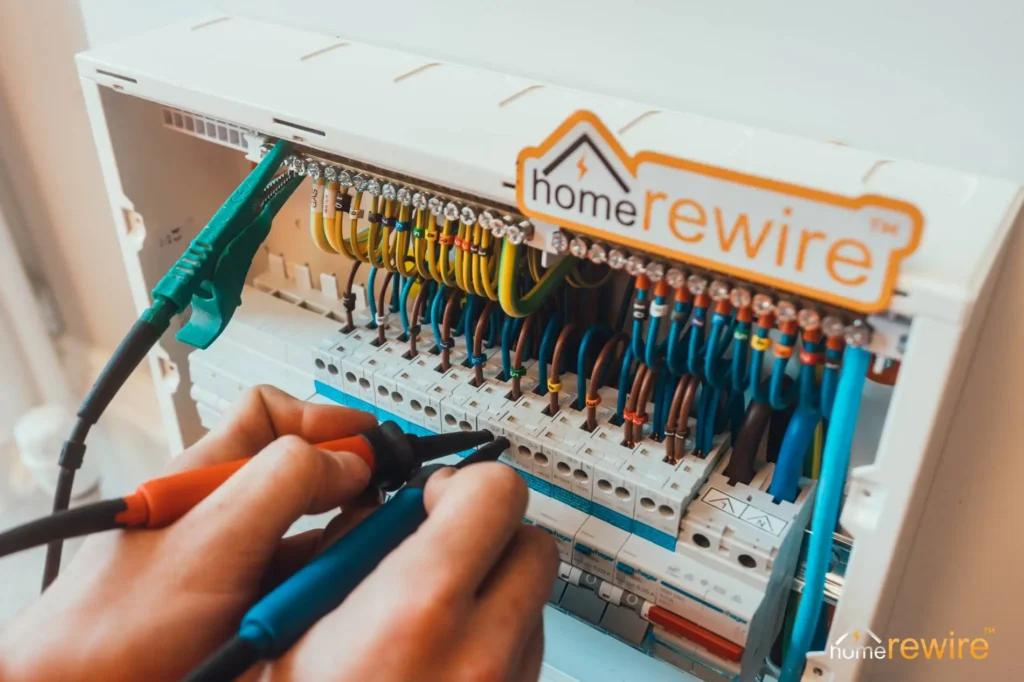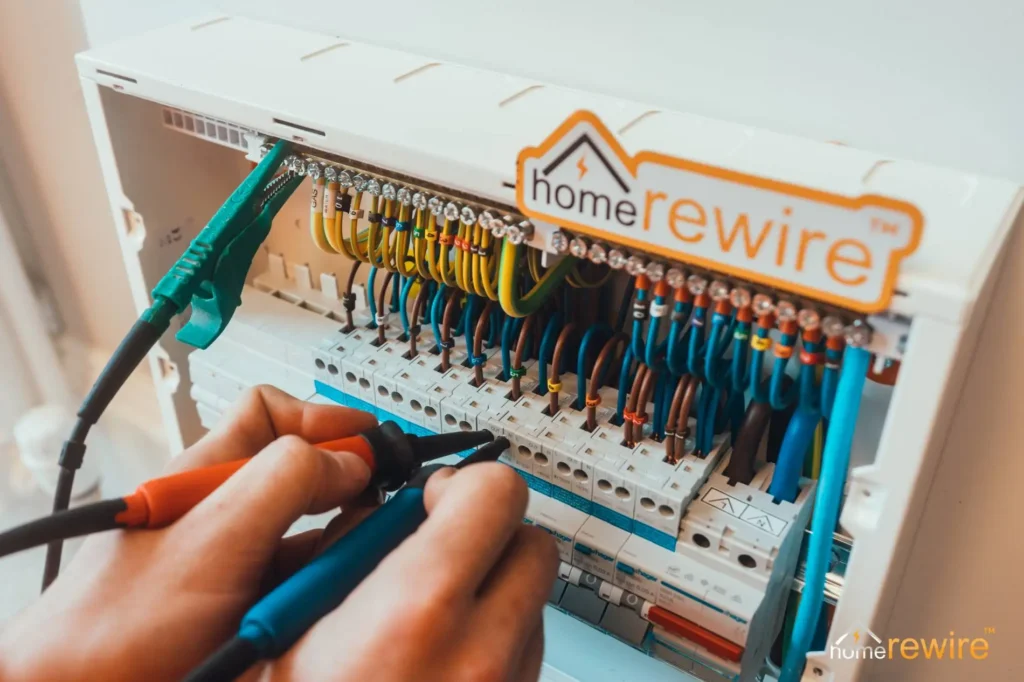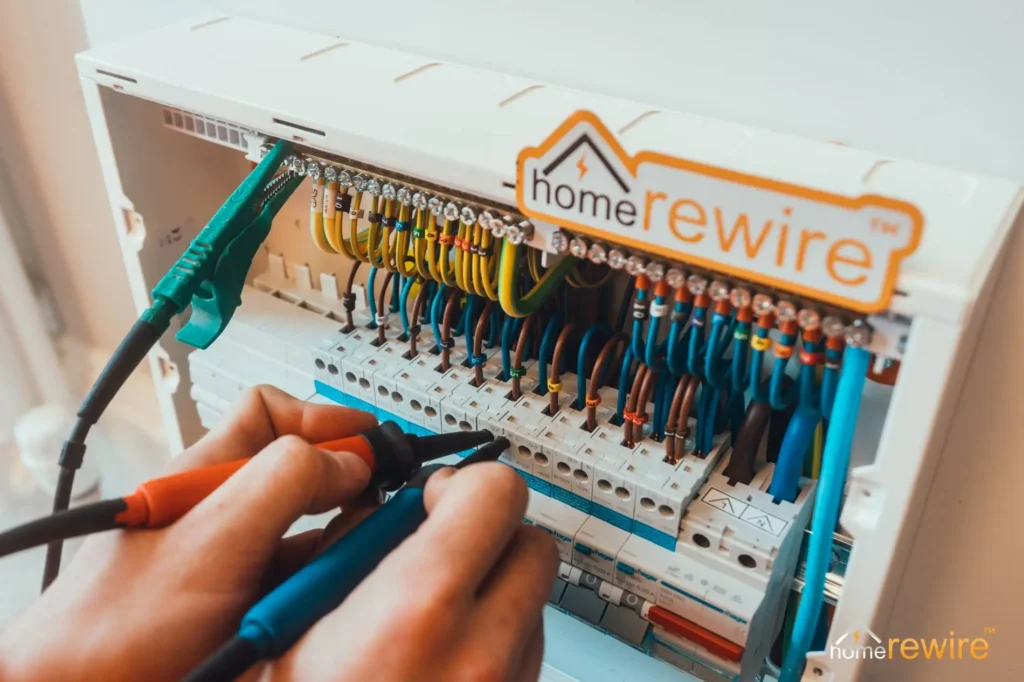

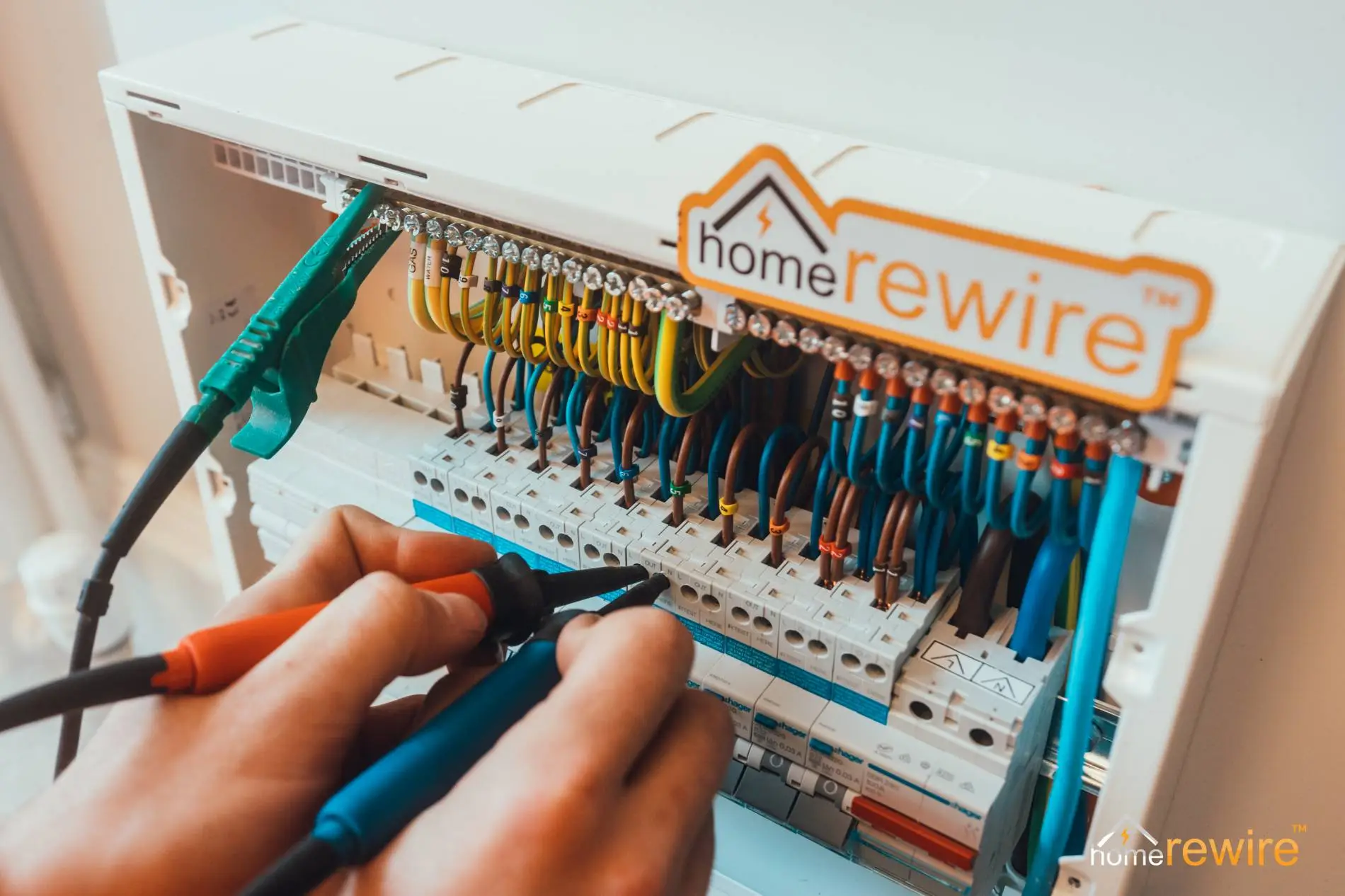
A light switch that stops working almost always comes down to one of four things — a worn-out switch mechanism, a loose or damaged wiring connection, a tripped circuit breaker, or a fault further along the circuit itself. Which one it is determines whether it’s a five-minute fix or something that needs a qualified electrician.
Before pulling any faceplates off, check your consumer unit. If the MCB on the lighting circuit has tripped, reset it and test the switch.
If it trips again straight away, something on that circuit is drawing excess current — leave it alone and get it looked at. If the breaker is fine and the switch still doesn’t work, the fault is at the switch or behind it.
Broken Light Switch Not Turning On – Types
Not all switches are built the same and they don’t all fail the same way. Knowing what type you have is the first step to understanding what’s gone wrong.
Toggle Switches
The traditional style — a small lever that flips up and down. Simple, reliable, and standard in UK homes for decades. When they fail it’s almost always the internal contacts wearing out over time. There’s no repair for this; the switch body needs replacing. A toggle that feels loose or no longer clicks cleanly into position is a good sign it’s on its way out.
Rocker Switches
The flat, wide, press-top-or-bottom style found in most modern homes. Functionally identical to a toggle but more comfortable to use when your hands are full. They fail in the same way — worn contacts — but the rocker mechanism itself can also crack if something catches on it. If the switch rocks but nothing happens electrically, the contacts inside have gone.
Push-Button Switches
Common in period properties and design-led renovations. They click into a depressed position to activate and click again to release. The internal spring mechanism can wear out or become sticky over time, making the switch unresponsive. Some versions incorporate a rotary dimmer dial alongside the push mechanism — when these develop faults it’s usually the dimmer component rather than the push switch causing the problem.
Slider Switches
A vertical track with a sliding actuator to adjust brightness — effectively a dimmer in a different form. The same LED compatibility rules apply as with rotary dimmers. Sliders can also collect dust and debris in the track over time, which causes resistance and inconsistent dimming behaviour. Clean the track before assuming the switch has failed. The difference between eic and eicr is important to understand when selecting the right electrical installation components. Eic refers to an initial inspection condition, while eicr signifies an electrical installation condition report, which provides a more in-depth examination of an existing electrical system. Knowing these distinctions can help ensure compliance with safety regulations and enhance overall system performance.
Dimmer Switches
Dimmers reduce power to the lamp by phase-cutting the AC waveform. Leading-edge dimmers were designed for incandescent and halogen loads and don’t always play well with modern LED drivers, which are non-linear loads. The result is flickering, audible buzzing from the switch or fitting, or failure to dim at all. Dimmer switch buzzing causes frustration for users who expect a smooth dimming experience. This noise often indicates compatibility issues between the dimmer and the LED drivers. To mitigate these problems, consider using a dimmer specifically designed for LED lights to enhance performance and eliminate unwanted sounds.
Before replacing a dimmer, check three things: confirm your bulbs are rated as dimmable LEDs; check the total lamp wattage on the circuit against the dimmer’s minimum load rating — LED setups frequently fall below this threshold; and check whether a neutral is present at the switch position, as modern trailing-edge and LED-compatible dimmers often require one that older installations don’t have wired in.
Clapper Switches
Sound-activated switches — triggered by a sharp clap or noise — are occasionally found in retrofit or novelty installations. They operate via a small microphone and relay rather than a direct mechanical connection. When they stop responding it’s usually sensitivity drift, a failed relay, or background noise interference. Worth knowing: any mains-voltage switching device still needs to meet basic safety requirements regardless of how unconventional it is, so earth continuity matters even here.
Smart Light Switches
Smart switches connect via Wi-Fi, Zigbee, Z-Wave, or Bluetooth and replace standard switch mechanisms while retaining a physical press function alongside app, timer, and voice control. They’re increasingly common in both homes and commercial settings.
When a smart switch stops working, the fault is usually one of three things: lost network connectivity, a firmware or app issue, or — most commonly from a wiring standpoint — the absence of a neutral conductor at the switch position. Most smart switches need a neutral to power their internal electronics continuously, even when the light is off. Many older UK installations only bring live and switched-live to the switch position with no neutral present, which is the single most common reason smart switch installations fail or aren’t possible without additional wiring work.
Multi-location smart switching on two-way or intermediate circuits adds further complexity — not all smart switch ranges support this without additional hardware, and the wiring configuration needs careful consideration before installation.
One-Way, Two-Way, and Intermediate Switches
Single-Pole (One-Way) Switches
The most common switch in UK homes. Controls a single circuit from one location with a straightforward live-in, switched-live-out configuration. When it fails the cause is almost always the mechanism itself or a loose terminal connection.
Two-Way Switches
Standard on staircases and in rooms where a light needs controlling from two locations. The circuit uses three conductors between the switch positions: a common and two strappers (L1 and L2 in current wiring practice). When one end stops working, a strapper wire has usually come loose at one of the back boxes.
Older two-way installations wired before the 2004 harmonised cable colour changes use red, yellow, and blue conductors rather than current brown, grey, and black. If you open a back box in an older property and find non-standard colours, don’t guess at the reconnection. Incorrect wiring of a two-way circuit doesn’t just leave the switch not working — it can create a genuinely dangerous situation depending on what ends up connected where.
Intermediate Switches
Used where three or more positions need to control a single circuit — long corridors, large open-plan rooms, and commercial spaces. An intermediate switch sits between two two-way switches and works by crossing over the strapper connections. From the front it looks like any other switch; the difference is entirely in how it’s wired internally.
When an intermediate switch fails, the light typically stays permanently on or permanently off regardless of which switch position you operate. Diagnosing which switch in a multi-position corridor circuit is at fault requires testing each back box in sequence — there’s no shortcut.
Gang Plates — Multiple Switches on One Faceplate
A gang refers to each independent switch position on a single faceplate. This matters in larger homes, open-plan spaces, and commercial environments where multiple circuits are controlled from one point.
- 1-gang — One switch, one circuit. Standard in most rooms
- 2-gang — Two independent switches; common where ceiling and floor or accent lighting are on separate circuits
- 3 or 4-gang — Typically found in kitchens, large living areas, offices, and commercial spaces where multiple lighting zones are controlled from one position
When one switch on a multi-gang plate stops working but others are fine, the fault is isolated to that switch’s mechanism or terminals — the other gangs are on completely separate circuit conductors. In commercial buildings, multi-gang plates often feed back to dedicated lighting distribution boards rather than a standard consumer unit, so the circuit configuration should be confirmed before any replacement work.
Smart Switching in Large Homes and Commercial Buildings
In large properties and commercial settings, individual smart switches give way to whole-building lighting control systems. DALI (Digital Addressable Lighting Interface) is the standard in commercial environments — each luminaire or circuit group is individually addressable and managed through a central controller or building management system. KNX is common in high-end residential and mixed-use buildings.
In large domestic properties, mesh-network smart switches are increasingly used, where each switch communicates directly with others rather than routing everything through a central hub. When part of a mesh drops out, it’s almost always signal range or a failed node rather than a wiring fault.
The key point for anyone planning smart switching across a large property: neutral conductors need to be present at every switch position, and in some systems the cabling infrastructure needs to be planned from the outset. This is far simpler to build in during a rewire than to retrofit into an existing installation afterwards.
When a Faulty Switch Points to Something Bigger
A single failed switch in a modern property is almost always just that — a failed switch. In older properties the picture can be different.
Multiple switches failing across the house, intermittent operation on lighting circuits, lights that flicker without a bulb or dimmer explanation, or an RCD that trips when a lighting circuit is used — these aren’t isolated switch problems. They’re signs of an electrical installation that’s deteriorating.
Rewirable fuse boards with ceramic fuse carriers are one of the clearest visual indicators that a property’s wiring predates current safety standards and hasn’t been updated since.
We come across this regularly across Glasgow and the wider central Scotland area — particularly in sandstone tenements, inter-war semis, and pre-1970s housing stock where original wiring has never been replaced. Understanding uk electrical wiring colour standards is essential for ensuring safety and compliance in older homes. Many properties may not adhere to current standards, which can lead to hazardous situations. Homeowners should consider consulting a qualified electrician to evaluate their wiring and bring it up to code.
In those properties, replacing individual switches one at a time becomes an exercise in diminishing returns as the underlying cables and connections continue to age.
A proper electrical inspection gives you a clear picture of where things actually stand. If a rewire turns out to be the right answer, HomeRewire is Scotland’s number one rated electrical contractor and we’ve completed over 6,000 full house rewires across the country. Most are done in 1–2 days — considerably faster than the industry standard of 4–10 days and with far less disruption than people anticipate. We’ll give you a straight assessment rather than recommending work that isn’t needed.
Frequently Asked Questions
My light switch isn’t working but the light is on — why?
The switch has failed in the closed position and can no longer break the circuit. Less commonly, a wiring fault elsewhere is maintaining the circuit regardless of switch position. Either way it needs inspecting — a light you can’t switch off is both a nuisance and worth investigating promptly.
Why has my two-way switch stopped working from one end?
A strapper wire at one of the two switch positions has come loose from its terminal. Isolate the circuit at the consumer unit and check the back box at both ends. If the wiring uses non-standard pre-2004 cable colours, don’t attempt to reconnect without knowing what each conductor is doing.
My smart switch won’t work — is it the switch or the wiring?
Check the neutral first. Most smart switches won’t function without a neutral at the switch position, and many older UK installations don’t have one run to the switch. Also check Wi-Fi or mesh connectivity before assuming the fault is electrical.
Why is my dimmer switch buzzing?
Almost always a compatibility issue between the dimmer and the lamp type. Confirm the bulbs are dimmable LEDs and check the total circuit wattage against the dimmer’s minimum load rating. A leading-edge dimmer running an LED circuit below its minimum threshold is the most frequent cause.
How do I find the faulty switch in a multi-location intermediate circuit?
Test each switch position in sequence with the circuit de-energised and a continuity tester. The faulty intermediate switch will show no continuity through its crossover terminals. In a long corridor with several positions this takes time but there’s no reliable shortcut.
Could failing light switches mean I need a full rewire?
In a modern property, almost certainly not. In an older property where switch faults are appearing across multiple circuits and rooms, it’s a reasonable indicator that the installation needs proper assessment. An electrical inspection will give you a definitive answer.